
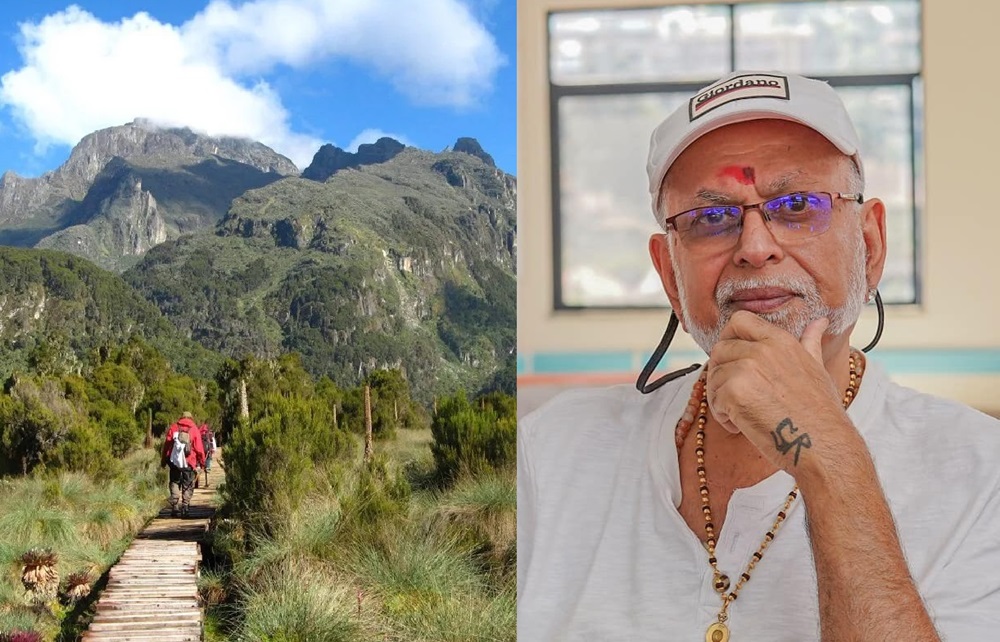
Kasese, Uganda: Mention Kasese, and many Ugandans immediately think of the snow-capped Rwenzori Mountains, Queen Elizabeth National Park, or the bustling Mpondwe border with the Democratic Republic of Congo. Others associate the district with the once-thriving Kilembe copper mines or the devastating floods that have periodically hit the region.
Yet beyond its breathtaking landscapes and strategic location lies a district that has quietly shaped Uganda’s business, tourism, mining, and conservation history.
Perhaps less known is that Kasese is also the birthplace of Uganda’s business magnate Dr. Sudhir Ruparelia, whose journey from the small town of Kabatoro to building one of East Africa’s largest private business empires mirrors the resilience and ambition that the district itself represents.
The billionaire entrepreneur, whose business empire spans hospitality, education, banking, insurance and real estate, was born in Kabatoro, Kasese District, before his family later relocated. Today, he remains one of Uganda’s most successful investors.
Interestingly, sources close to the Ruparelia Group have, over the years, indicated that Dr. Sudhir has envisioned developing a world-class luxury resort on the shores of Lake George in Kasese as a tribute to his childhood roots. If realised, the project would mirror the standards of the iconic Speke Resort Munyonyo and could transform tourism in western Uganda.
Such an investment would not only serve visitors exploring the Rwenzori Mountains and Queen Elizabeth National Park, but would also position Kasese as a premier hospitality hub for tourists and business travellers moving across the entire Rwenzori sub-region, including Mbarara, Rubirizi, Kasese, Fort Portal and Bundibugyo, as well as those heading into the Democratic Republic of Congo through the busy Mpondwe border.
But here are six fascinating reasons why Kasese remains one of Uganda’s most unique districts.
1. It is the birthplace of business tycoon Dr. Sudhir Ruparelia
Few people know that Dr. Sudhir Ruparelia, founder and chairman of the Ruparelia Group, was born in Kabatoro, Kasese District.

Today, Sudhir is widely regarded as Uganda’s wealthiest businessman, with investments spanning real estate, hospitality, education, insurance, floriculture and agriculture. His business empire includes luxury hotels, commercial buildings, schools, residential estates and tourism facilities spread across Uganda.
From humble beginnings in western Uganda, Sudhir has built a multinational enterprise employing thousands of Ugandans, making Kasese one of the districts that proudly claims one of Africa’s most successful entrepreneurs as its son.
2. It is home to the famous “Snow on the Equator”
Kasese is internationally celebrated for hosting the Rwenzori Mountains, commonly known as the Mountains of the Moon. Unlike most equatorial regions, the highest peaks of the Rwenzoris remain permanently covered by glaciers and snow despite lying almost directly on the Equator.
The mountain range, whose highest point is Margherita Peak at 5,109 metres, attracts climbers and adventure tourists from around the world. The spectacular scenery, alpine vegetation and rare wildlife have earned the mountains recognition as a UNESCO World Heritage Site.
3. It is Uganda’s only district with two national parks
No other district in Uganda enjoys the distinction of hosting two of the country’s premier national parks.
Kasese is home to both the Queen Elizabeth National Park, Uganda’s most visited conservation area, famous for its tree-climbing lions in Ishasha, elephants, buffaloes, hippos, leopards and the Kazinga Channel, and Rwenzori Mountains National Park, offering world-class mountaineering, hiking and eco-tourism experiences.
Together, the two parks attract tens of thousands of domestic and international tourists annually, making tourism one of Kasese’s biggest economic pillars.
4. Once Uganda’s mining powerhouse
Long before tourism became the district’s hallmark, Kasese was synonymous with mining. The historic Kilembe Mines hosted some of Africa’s richest deposits of copper and cobalt, transforming the district into Uganda’s industrial hub during the 1960s and 1970s.
At its peak, the mines employed thousands of workers and contributed significantly to Uganda’s export earnings. Although mining operations later declined, the government has in recent years pursued efforts to revive Kilembe Mines as part of broader plans to revitalise Uganda’s mineral sector.

5. It hosts one of Africa’s oldest traditional salt mines
Kasese is also home to Lake Katwe, a remarkable crater lake where local communities have harvested salt for centuries using traditional evaporation techniques.
Unlike conventional mining operations, salt extraction at Lake Katwe remains largely artisanal, with generations of families depending on the activity for their livelihoods. The lake produces both edible salt and industrial-grade salt while attracting tourists eager to witness one of Uganda’s oldest surviving indigenous industries.
Lake Katwe has become an important cultural heritage site, blending tourism, history and local economic activity.
6. It is Uganda’s gateway to Central Africa
Kasese’s strategic location makes it one of Uganda’s most important trade corridors. The Mpondwe Border Post, linking Uganda with the Democratic Republic of Congo (DRC), is among the busiest border crossings in East Africa.
Every day, thousands of traders, transporters and travellers cross through Mpondwe, facilitating regional trade worth billions of shillings annually.
The border has become increasingly important following improved regional integration under the East African Community (EAC) and growing commercial ties between Uganda and eastern Congo.
Did You Know?
- Kasese is one of Uganda’s leading producers of cotton, coffee and cocoa.
- The district hosts several hydroelectric power stations along the Mubuku River.
- Queen Elizabeth National Park receives the highest number of tourists among Uganda’s national parks.
- The Rwenzori Mountains are Africa’s third-highest mountain range after Kilimanjaro and Mount Kenya.
A district of endless possibilities
Beyond these six highlights, Kasese continues to distinguish itself through its rich cultural diversity, fertile agricultural land, hydroelectric power generation, wildlife conservation and growing tourism sector.
The district is home to the Bakonzo people and serves as the seat of the Rwenzururu Kingdom, whose cultural heritage adds another dimension to Kasese’s national significance.
Its breathtaking crater lakes, hot springs, waterfalls, mountain trails and abundant wildlife have made it one of Uganda’s most photographed destinations.
As Uganda continues promoting domestic tourism and regional trade, Kasese remains a district where business, nature, culture and history converge, proving that its story stretches far beyond being the birthplace of one of Africa’s wealthiest entrepreneurs.
If you would like your article/opinion to be published on Uganda’s most authoritative news platform, send your submission on: [email protected]. You can also follow DailyExpress on WhatsApp and on Twitter (X) for realtime updates.