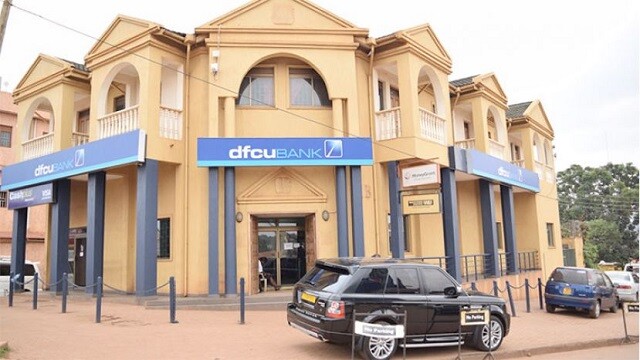
Standfirst: Nearly a decade after acquiring Crane Bank’s assets, dfcu is facing one of the most expensive legal battles in Uganda’s corporate history. With a £170 million lawsuit heading to trial in London this October, legal costs have erased the bank’s first-half profits, raising fresh questions about one of Uganda’s most controversial banking transactions.
Kampala, Uganda: Nearly 10 years after it ‘fraudulently’ acquired the assets of the defunct Crane Bank, dfcu Bank is still paying a heavy financial price for one of Uganda’s most controversial banking transactions, with mounting legal costs from a £170 million (about Shs840 billion) lawsuit in London’s Commercial Court pushing the lender into a first-half loss.
On Tuesday, July 28, dfcu issued a profit warning informing shareholders that its unaudited financial results for the six months ended June 30, 2026 would show a net loss, reversing the profitability recorded during the same period last year.
The lender attributed the reversal not to weakness in its banking operations but to the escalating legal expenses arising from the long-running Crane Bank litigation before the English High Court.
The announcement marks the first time the legal dispute has materially pushed the bank into the red despite continued growth in lending, deposits and total assets.
A profitable bank dragged down by legal costs
According to dfcu’s interim results, the Group recorded a net loss of Shs15.8 billion during the first half of 2026, compared to a Shs34.5 billion profit over the same period in 2025, representing a swing of more than Shs50 billion.
Yet beneath those headline figures, the bank’s core business continued to expand. Operating income increased by eight percent to Shs215.6 billion, while customer loans grew to Shs1.44 trillion, deposits rose to Shs2.87 trillion, and total assets reached Shs3.94 trillion.
The principal drag came from operating expenses, which surged by 53 percent, rising from Shs150.4 billion to Shs230 billion.
Although the interim report does not separately disclose litigation expenses, dfcu has consistently maintained that the Crane Bank case remains the primary driver of the increased costs.
Its 2025 Annual Report had already revealed that legal expenses linked to the London proceedings reached Shs76.6 billion last year, accounting for 23 percent of the Group’s total operating costs, up sharply from Shs42.3 billion in 2024.
Chief Executive Officer Charles Mudiwa previously acknowledged the burden while insisting the underlying business remained strong. “Despite lingering historical legal costs, which we continue to manage with resilience, our underlying operating profit reflects a leaner, faster and more agile bank,” Mudiwa said.

The roots of the dispute
The dispute traces back to October 2016, when the Bank of Uganda placed Crane Bank Limited under statutory management after concluding that it had become significantly undercapitalised.
The central bank relied on a forensic audit conducted by PricewaterhouseCoopers (PwC), which found substantial capital erosion, extensive insider lending, and non-performing loans that had left the bank with negative core capital estimated at about Shs240 billion.
In January 2017, Bank of Uganda sold selected Crane Bank assets and liabilities to dfcu Bank. The acquisition instantly transformed dfcu into one of Uganda’s largest commercial banks, increasing its balance sheet by almost two-thirds overnight.
However, Crane Bank’s former majority shareholder, businessman Sudhir Ruparelia, has consistently disputed the central bank’s account. He argues that the bank was fundamentally solvent and that regulatory intervention triggered a liquidity crisis which ultimately forced its sale.
Sudhir has also alleged that the disposal process lacked an independent valuation and resulted in Crane Bank’s assets being transferred at a significantly undervalued price.
Bank of Uganda and dfcu have consistently rejected those allegations, maintaining that the resolution process complied with the law and was supported by PwC’s findings.
Importantly, none of the allegations made by Ruparelia against either institution has yet been determined by any court.
From Kampala to London
After a separate Ugandan lawsuit brought by Bank of Uganda against Ruparelia collapsed following defeats in both the High Court and Court of Appeal, attention shifted to London.
In 2020, Sudhir Ruparelia, members of his family and Crane Bank Limited filed proceedings before the English High Court seeking damages exceeding £170 million.
The claim alleges conspiracy to injure by unlawful means and dishonest assistance in what the claimants describe as an improper acquisition of Crane Bank’s assets.
dfcu has denied the allegations in their entirety.

Initially, the bank secured a procedural victory in October 2022, when the English High Court ruled that England lacked jurisdiction to hear the dispute. However, the decision was overturned by the Court of Appeal in July 2023, allowing the case to proceed.
An attempt to take the jurisdiction issue to the UK Supreme Court was unsuccessful in 2024, clearing the way for a substantive trial.
Since then, both sides have engaged in extensive disclosure battles.
Among the more notable rulings, the English court declined efforts to exclude the PwC reports from evidence while also ordering forensic examination of electronic devices belonging to members of the Ruparelia family as part of disclosure.
Despite numerous interim applications, the substantive allegations remain unresolved.
Trial now only weeks away
The long-awaited trial is scheduled to begin in October 2026 before the Commercial Court in London. Legal experts expect proceedings to run for several weeks, with judgment likely to be reserved for months afterwards.
Even then, further appeals cannot be ruled out. That means litigation costs are expected to remain a significant feature of dfcu’s financial performance well into 2027.
The bank says it is also engaging Bank of Uganda regarding recovery of some legal costs connected to the 2017 transaction and remains optimistic that, should it successfully defend the claim, English cost-shifting rules could allow it to recover a substantial portion of its legal expenses from the unsuccessful party.
Investors watching closely
Despite the current losses, analysts note that dfcu’s capital position remains strong. At the end of 2025, the Group’s Tier 1 capital ratio stood at 30 percent, three times higher than Bank of Uganda’s regulatory minimum of 10 percent.
Total capital adequacy was 30.7 percent, comfortably above the required 12 percent threshold.
Nevertheless, investors will be watching the October trial closely.
For nearly a decade, what began as a rescue acquisition has evolved into one of the largest cross-border commercial disputes involving a Ugandan financial institution.
Until the London court determines the merits of the case, the shadow of Crane Bank is likely to continue hanging over dfcu’s balance sheet.
If you would like your article/opinion to be published on Uganda’s most authoritative news platform, send your submission on: [email protected]. You can also follow DailyExpress on WhatsApp and on Twitter (X) for realtime updates.