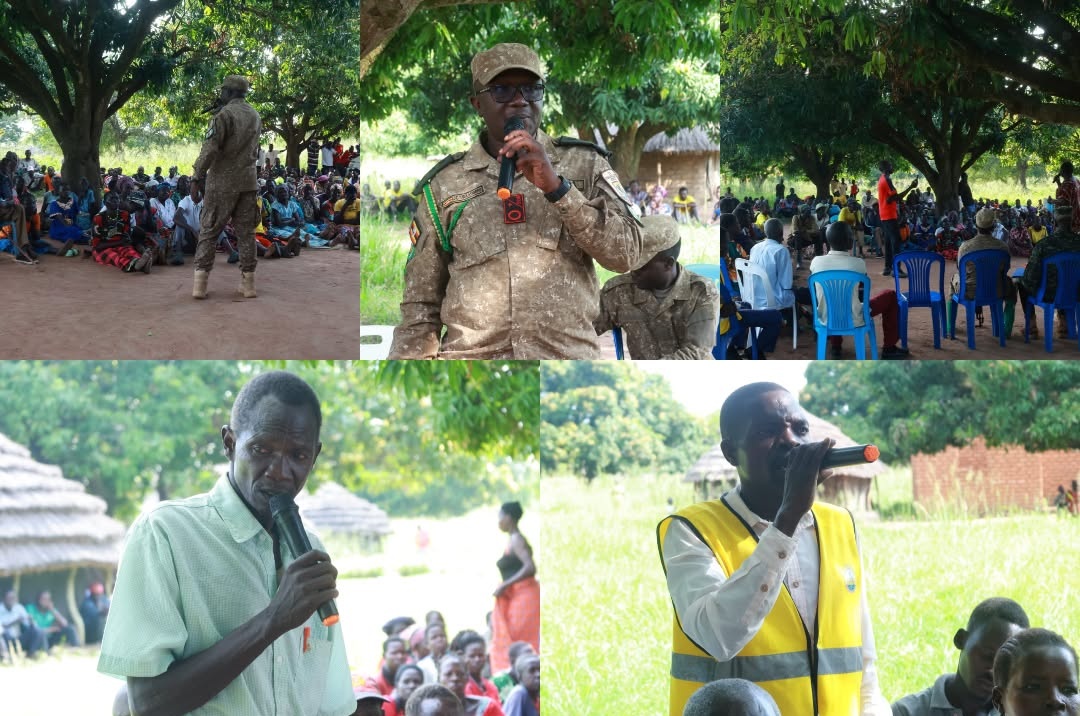
In Summary: Residents in Madi Opei Sub-county have called for electric fencing, food assistance and wildlife deterrent equipment as they grapple with crop destruction and wildlife incursions. UWA has pledged to strengthen response teams, prioritise compensation cases and work with local leaders to promote safer ways of handling encounters with dangerous animals.
Lamwo, Uganda — The Uganda Wildlife Authority (UWA) has intensified community sensitisation in Lamwo District, urging residents to adopt safer ways of responding to wildlife encounters as authorities seek to reduce human-wildlife conflict in the Kidepo Landscape.
The sensitisation exercise brought together UWA officials, local government leaders and residents of Madi Opei Sub-county for a community dialogue aimed at addressing wildlife incursions and identifying practical measures to protect lives and livelihoods.
Led by Assistant Resident District Commissioner Oyoo Robinson, the engagement brought together residents from Tekila, Odiya Oket, Oboke Olot, Lawiri, Aringo Kul and Kwiri villages, alongside representatives from Agoro, Padibe East, Padibe West and Lokung.
The initiative seeks to strengthen community participation in biodiversity conservation, combat illegal wildlife trade, improve livelihoods and build stronger partnerships between communities and conservation institutions.
During the dialogue, UWA sensitised residents on understanding wildlife behaviour, responding appropriately when encountering dangerous animals and reporting incidents through established channels to enable timely intervention.
Communities were also encouraged to work closely with wildlife authorities and avoid confrontational actions that could expose them to danger or escalate human-wildlife conflict.
UWA Sociologist Jimmy Tinkasimire emphasised that successful wildlife conservation requires cooperation between the Authority and communities living alongside wildlife. He explained how UWA’s approach focuses on promoting coexistence and addressing conflict through community participation, awareness and timely response.
Tinkasimire cautioned residents against hostility towards wildlife, urging them to appreciate wild animals as part of the natural environment. He assured the communities that response teams would be put in place to prevent further direct attacks and that compensation cases would be prioritised.
He acknowledged concerns about delays in compensation, explaining that the process involves procedures that can sometimes take time. Tinkasimire, nevertheless, assured residents that UWA’s human-wildlife conflict teams would continue working to minimise the delays.
Residents call for food assistance and deterrent equipment
The community dialogue also provided residents with an opportunity to present concerns and propose interventions to reduce the impact of wildlife incursions.
LC1 leader Francis Ojara appealed for food assistance for households affected by wildlife-related destruction as they await compensation, noting the hardship caused by damage to crops.
Residents also requested deterrent equipment, including vuvuzelas, whistles and Roman candles, to help scare away problem animals under the guidance of wildlife rangers.

Representing the area Member of Parliament, Johnson Nyeko Kezekiya, Peter Ali Lumoro called for the installation of an electric fence to prevent elephants from entering settlements and destroying crops.
The proposals highlighted the need for interventions that address both immediate community concerns and longer-term protection against wildlife incursions.
Assistant RDC Oyoo Robinson commended UWA and the Uganda People’s Defence Forces (UPDF) for supporting communities affected by wildlife-related challenges. He called for stronger cross-border collaboration, observing that difficult conditions in South Sudan were contributing to wildlife movement into neighbouring communities.
Robinson also urged UWA and district authorities to strengthen ground-level responses through ranger deployment and closer coordination. He called on stakeholders to lobby for food assistance for affected households and emphasised that compensation should reflect the extent of damage caused by wildlife.
The RDC further underscored the importance of continuous community sensitisation, saying knowledge of wildlife behaviour and appropriate response measures is essential in protecting lives and preventing dangerous encounters.
The exercise is part of a wider awareness campaign being implemented by UWA, with support from the Global Environment Facility (GEF), across seven districts within the Kidepo Landscape.
If you would like your article/opinion to be published on Uganda’s most authoritative news platform, send your submission on: [email protected]. You can also follow DailyExpress on WhatsApp and on Twitter (X) for realtime updates.