
Adjumani, Uganda: The Opposition Forum for Democratic Change (FDC) presidential candidate, Rt. Hon. Nathan Nandala Mafabi has promised to introduce coffee production in Adjumani District as part of his broader plan to fix Uganda’s struggling economy and put “money directly into the pockets of citizens.”
Addressing supporters on Monday at Cesia Playground in Pavuraga Village, Adjumani Town Council, Mafabi said the people of Adjumani would benefit greatly from the commercialization of coffee growing, which he described as a “vital engine of socio-economic transformation.”
“Coffee has the potential to change lives. When the people of Adjumani start producing coffee, the money they earn will go straight into their pockets, not through middlemen,” Mafabi said.
Coffee as an Engine for Transformation
With Uganda’s coffee industry contributing over 14.4% of total merchandise export earnings and supporting more than 1.8 million smallholder households across its value chain, Mafabi said this potential must now be extended to neglected regions like Adjumani to achieve equitable national growth.

“The current leaders have eaten enough; it’s time for them to rest,” Mafabi charged, adding that his administration would prioritize rural productivity, fair market access, and direct farmer support.
He added that FDC’s 2026 manifesto, themed “Fixing the Economy: Money in Our Pockets,” outlines a comprehensive blueprint for rebuilding Uganda’s economy through job creation, strategic investment, and governance reform.
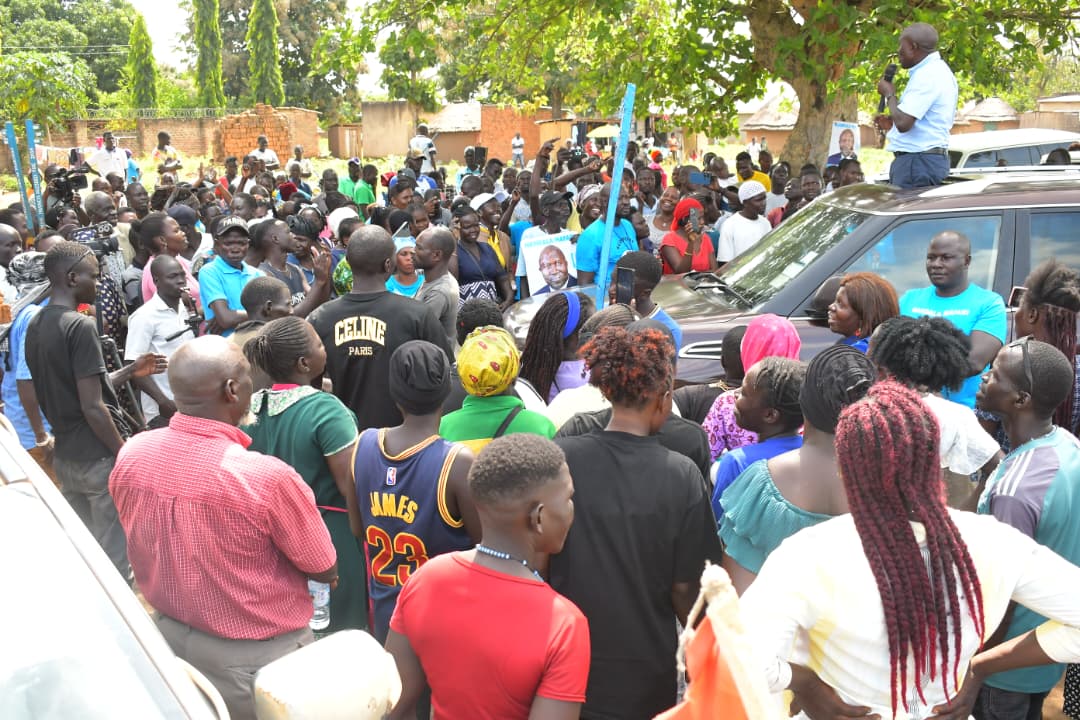
Mafabi argued that a healthy economy is not one defined by government projects, but by citizens’ capacity to earn, save, and invest. “A vote for me is a vote for jobs, a vote for food on the table, and a vote for money in your pockets,” Mafabi said. “We shall fix our infrastructure, reduce the debt burden, and restore Uganda’s human development potential.”
The FDC leader highlighted five pillars of his proposed reforms: Generating employment opportunities, strategic investments in production, human capital development, leadership and governance reform and inclusion of interest groups such as youth, women, and veterans.
Mafabi criticized the government’s “piecemeal agricultural interventions,” arguing that farmers face low productivity, food insecurity, and limited credit access due to poor investment in agricultural modernization.
“The agricultural sector must become the foundation of our national recovery,” he said. “With coffee introduced in Adjumani, we can turn poverty into productivity.”
He promised to invest in agricultural value chains, promote farm mechanization, and establish agro-based processing zones to enhance productivity.

Education Crisis: ‘Our System Has Failed the Youth’

Turning to education, Mafabi lamented Uganda’s declining learning standards, saying the system has become detached from the country’s economic needs. “Our universities produce job seekers, not job creators,” he said. “Education is supposed to empower, not disempower.”
He cited data showing over 4 million Ugandans aged 15–24 are neither in employment, education, nor training, calling it “a national liability.”
Nandala blamed declining literacy levels, poor infrastructure, and incomplete curriculum reforms for the sector’s decay, insisting FDC’s government would reform education to align with skills, innovation, and employability.
Mafabi urged voters to make 2026 a year of peaceful transition and transformation. “Your vote in 2026 is paramount. Vote for change that brings jobs, money, and dignity. Uganda needs leaders who care about people, not those who make them beggars through failed programs,” Mafabi said.
He concluded by reaffirming FDC’s commitment to good governance, veterans’ compensation, and youth empowerment, saying only an economy that works for everyone can secure lasting peace and prosperity.
If you would like your article/opinion to be published on Uganda’s most authoritative news platform, send your submission on: [email protected]. You can also follow DailyExpress on WhatsApp and on Twitter (X) for realtime updates.