

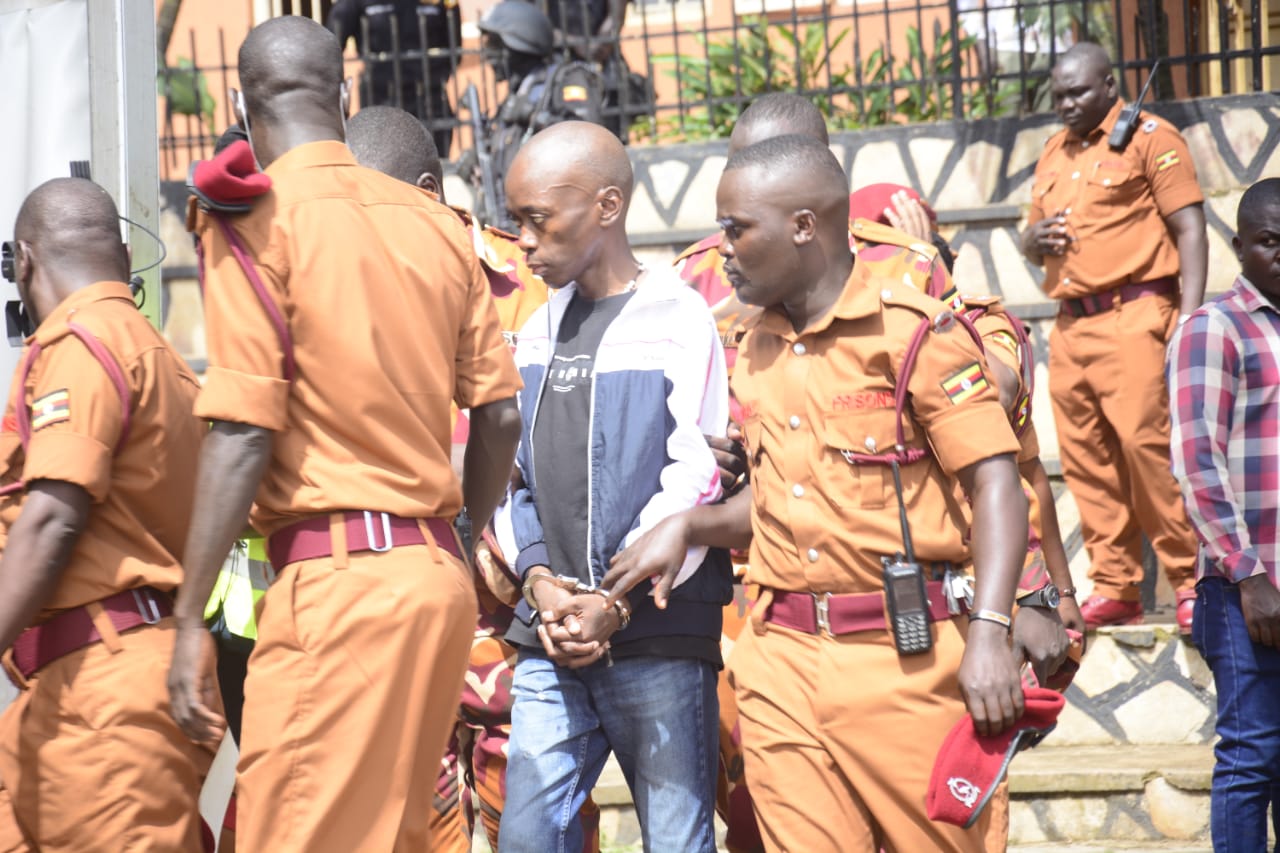
Kampala, Uganda: The Uganda Law Society (ULS) has formally written to the country’s judiciary demanding the immediate halt of the controversial mobile High Court trial of Christopher Okello Onyum, escalating a growing constitutional standoff over what it describes as a “judicial lynching” unfolding in full public view.
In a protest note dated April 13 addressed to Chief Justice Flavian Zeija, Principal Judge Jane Frances Abodo and the High Court Judge (Criminal Division) Alice Komuhangi, ULS Vice President, Asiimwe Anthony, argued that the ongoing proceedings at Ggaba Community Church grounds violate fundamental fair trial guarantees and risk setting a dangerous precedent for Uganda’s justice system.
“The Society calls for the immediate cancellation of the mobile court session in this matter. The trial must proceed at the designated High Court premises in Kampala, in strict compliance with the Constitution, the Judicature Act, and the established Rules of Procedure,” the letter, also addressed to the DPP, reads in part.
Asiimwe’s letter followed an earlier hard-hitting statement issued on April 12, in which the legal body condemned the mobile court arrangement as “mob justice disguised in decorum” and warned that the trial environment had already been irreversibly compromised.
The legal battle stems from the April 2, 2026, massacre at Ggaba Early Childhood Development Centre, where four toddlers were brutally killed in an attack that shocked the nation.
The suspect, Okello, was arrested shortly after the incident and formally charged on April 8 at Makindye Chief Magistrate’s Court. Days later, he was committed to the High Court for trial.

However, the case quickly took a dramatic turn after senior government officials publicly weighed in. Statements from political actors, including calls for swift punishment and references to the suspect as a “criminal,” drew concern from legal observers about possible prejudice.
By April 10, details of a public-facing mobile court session had emerged, complete with live broadcasts, giant screens, and controlled public attendance of up to 1,000 people at the crime scene itself.
Day One: Trial Opens Amid Public Tension
On Monday, April 13, the High Court, presided over by Justice Alice Komuhangi Khaukha, convened in Ggaba in what has been described as a historic but deeply contentious session.
Okello pleaded not guilty to four counts of murder, responding in court that he understood the charges but denied responsibility.
The proceedings unfolded in a charged atmosphere, with large crowds gathering to witness the trial. At one point, sections of the public reacted audibly to the plea, prompting the judge to call for order and remind attendees of courtroom decorum.
Prosecution, led by Chief State Attorney Jonathan Muwaganya and Anna Kiiza, has begun presenting agreed evidence, including postmortem reports confirming the deaths of the four children.
ULS: ‘This Is Not Justice, It Is Judicial Lynching’
ULS has now intensified its opposition, arguing that the very structure of the trial violates Article 28 of the Constitution, which guarantees a fair hearing before an independent and impartial court.

“This is not public participation; it is the weaponisation of public grief to predetermine guilt,” the Society stated, warning that the convergence of political direction, public outrage, and judicial action has created a “lynch mob atmosphere.”
The lawyers’ body maintains that holding proceedings at the scene of the crime—amid mourners, community members, and live media coverage—renders impartiality impossible.
“A mobile court summoned to the crime scene at presidential command… cannot possibly be independent or impartial. It is structurally incapable of delivering justice,” the statement reads.
In its April 13 letter, ULS called for the Immediate cancellation of the mobile court session, transfer of the trial to a conventional High Court setting in Kampala and an urgent engagement with judicial leadership on constitutional concerns.
The Society insists that while the victims’ families deserve justice, “justice must be delivered fairly, impartially, and without theatrical flourish.”
ULS further warns that the Ggaba proceedings are not just about one case, but a defining test for Uganda’s rule of law. “This is not merely a single trial. It is a precedent in the making,” April 12, the statement cautions, noting that any erosion of due process under public pressure could become standard practice in future high-profile cases.
As the trial continues under intense national scrutiny, the clash between calls for swift justice and demands for constitutional safeguards now sets the stage for what could become one of Uganda’s most consequential legal showdowns in recent years.
If you would like your article/opinion to be published on Uganda’s most authoritative news platform, send your submission on: [email protected]. You can also follow DailyExpress on WhatsApp and on Twitter (X) for realtime updates.


