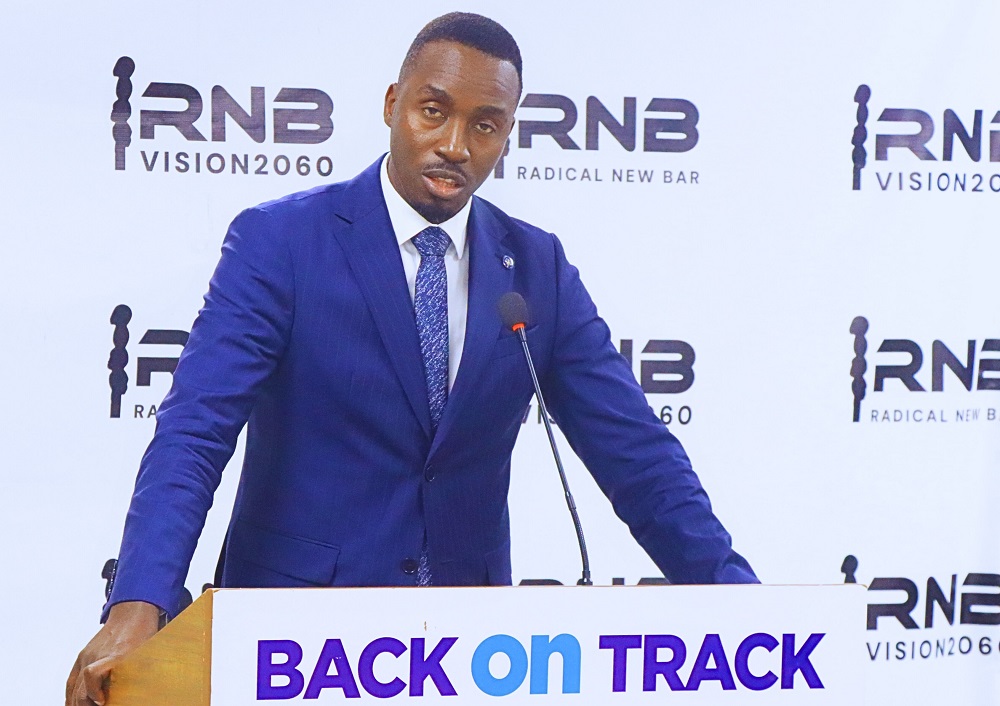
By Asiimwe Anthony
Since 6 AM today, my phone has been inundated with calls from the Bar, the public, and the press. They are furious at the 923-word article by Enoch Barata in New Vision of April 20, 2026, defending the so-called Sovereignty Bill. They demand a rebuttal.
Enoch Barata is not just a lawyer. He is the Director of Legal Services of the National Resistance Movement.
This is my rebuttal, as Vice President of the Uganda Law Society.
The NRM Legal Director’s defence of the so-called National Sovereignty Bill (in reality the Anti-Sovereignty Bill) presents a familiar script: “the world is changing, foreign interference is real, Uganda must adapt.”
But beneath the polished references to acronyms such as FARA, FICA and the global trends he cites lies a simple constitutional truth that the article conveniently ignores.
Sovereignty in Uganda belongs to the people, not the Government.
But who are the people?
The people are the voters from whom NRM hid this sovereignty-altering Bill during the recent elections. The people are the millions who will not get to read Barata’s English in a 20,000-circulation newspaper. The people, the rural and urban poor, are still denied access to the Constitution in their own languages despite Article 4 obligations.
Article 1 of the 1995 Constitution is unambiguous: “All power belongs to the people who shall exercise their sovereignty through their will and consent.”
This Bill does not protect that sovereignty. It transfers it to the Executive by allowing the Minister and a proposed Department of Peace and Security to define “Government interests” and punish dissent.
That is not protection. That is overthrow.
The referendum requirement is fatal.
Any law that alters the basic structure of the Constitution, especially the location of sovereignty, must be approved by Ugandans through a national referendum under Article 260(2). This Bill attempts to make those changes without ever consulting the people.
It is therefore unconstitutional, null and void.
Even if that fatal flaw were ignored, the substance collapses under international human rights standards.
The R v Oakes proportionality test demands that any limitation on rights be rational, necessary and proportionate. This Bill is none of those. It sweeps in legitimate criticism, diaspora voices, and civil society work under vague offences such as “economic sabotage.”
The R v Big M Drug Mart principle makes it clear that laws cannot impose state ideology or suppress fundamental freedoms. Yet this Bill criminalises dissent and redefines Ugandans abroad as foreigners.
Under the UN Human Rights Committee’s General Comment 34, restrictions on expression must be precise and necessary. Vague and overbroad laws that grant unchecked executive discretion are violations. This Bill fits that description exactly.
UN Special Rapporteur Maina Kiai has repeatedly warned that “foreign agents” laws are tools to silence civil society. They stigmatise NGOs, cut off funding, and criminalise association. This Bill follows that exact pattern.

The African Commission on Human and Peoples’ Rights sets similar standards: restrictions must be necessary, proportionate and non-discriminatory. Blanket criminalisation fails this test.
The comparison to jurisdictions like the United States, EU, Canada or Australia is misleading.
Those laws are narrow, targeted at covert foreign influence, and subject to judicial oversight. They do not criminalise domestic criticism. They do not label citizens as foreigners. They do not choke independent institutions.
This Bill does all three.
True sovereignty is self-determination by the people.
This Bill replaces “power belongs to the people” with “power belongs to Government.” It does not defend Uganda’s sovereignty. It dismantles it.
The Uganda Law Society, through its Radical New Bar Governing Council led by President Isaac Ssemakadde, has already stated it clearly: this Bill is an act of treason against the Constitution under Article 3.
It must be rejected.
The greatest act of patriotism today is not silence. It is defending the 1995 Constitution from those who no longer respect it.
The author is the Vice President, Uganda Law Society.
If you would like your article/opinion to be published on Uganda’s most authoritative news platform, send your submission on: [email protected]. You can also follow DailyExpress on WhatsApp and on Twitter (X) for realtime updates.