
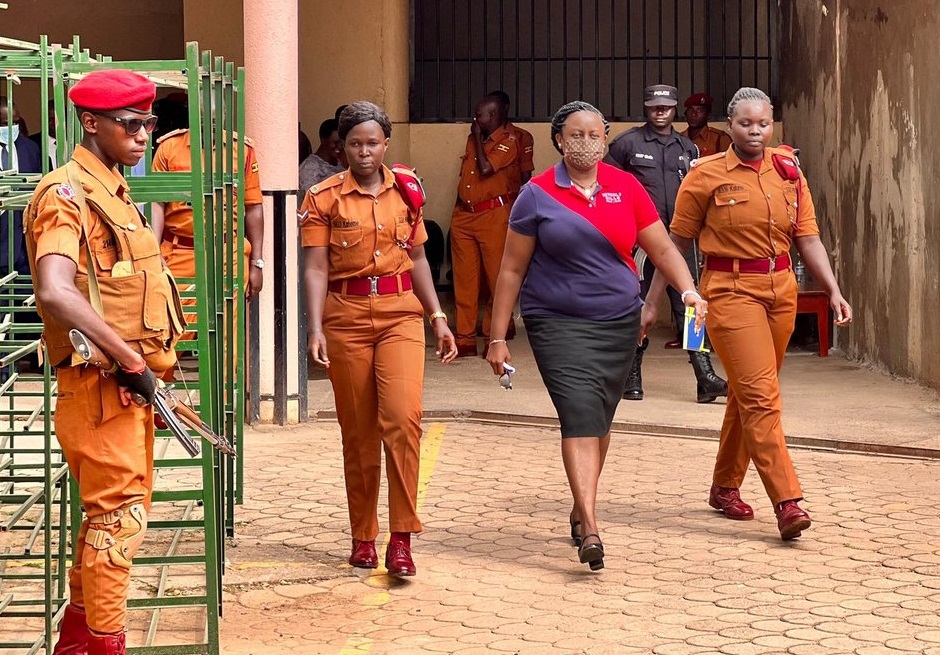
Kampala, Uganda: The corruption trial of former Trade Ministry Permanent Secretary Geraldine Ssali and her co-accused has stalled for over a year, with proceedings now hinging on a pending ruling from the Constitutional Court.
On April 17, 2026, Justice Jane Okuo Kajuga of the Anti-Corruption Division adjourned the case to May 29, 2026, citing the need to first resolve a constitutional petition filed by Busiki County MP Paul Akamba.
The delay stems from Akamba’s petition challenging his trial before the Anti-Corruption Court, in which he alleges torture by security personnel and violations of his fundamental rights.
Akamba is seeking dismissal of the charges, arguing that the case is tainted by human rights abuses—an issue now before the Constitutional Court.

The outcome of this petition is expected to determine whether the trial can proceed.
Sh3.8B Cooperative Funds
The prosecution accuses Ssali and her co-accused of irregularly handling Shs3.8 billion meant for Buyaka Growers Cooperative Society Limited.
Other accused persons include Lawyer Julius Kirya, Igara East MP Michael Mawanda, Elgon County MP Ignatius Wamakuyu Mudiimi and Principal Cooperative Officer Leonard Kavundira.
State prosecutors allege that Ssali abused her office during the 2021/2022 financial year by irregularly introducing Buyaka Growers Cooperative Society onto a list of entities to be compensated for war losses, despite it not appearing in the approved supplementary budget.
Prosecution contends that the decision was “prejudicial” to the Ministry of Trade and violated established financial procedures.
Court documents further indicate that Ssali authorized payments amounting to Shs3.8 billion to Kirya and Company Advocates in contravention of the Treasury Instructions of 2017.

Prosecutors argue that she acted “knowing or having reason to believe” that the transactions would cause financial loss to government.
The accused are also jointly charged with conspiracy to defraud the state of approximately Shs3.4 billion between 2019 and 2023.
The funds in question were part of a government compensation program for cooperative unions that suffered losses during the 1981–1986 liberation war and subsequent insurgencies.
These historical claims have, over time, become a complex area of public finance, with multiple cooperatives seeking redress for destroyed assets and disrupted operations.
The prolonged delay has raised concerns about accountability and the pace of handling high-profile corruption cases in Uganda. With proceedings now dependent on the Constitutional Court’s ruling, the case remains in limbo, leaving key questions around alleged financial mismanagement unresolved.
If you would like your article/opinion to be published on Uganda’s most authoritative news platform, send your submission on: [email protected]. You can also follow DailyExpress on WhatsApp and on Twitter (X) for realtime updates.