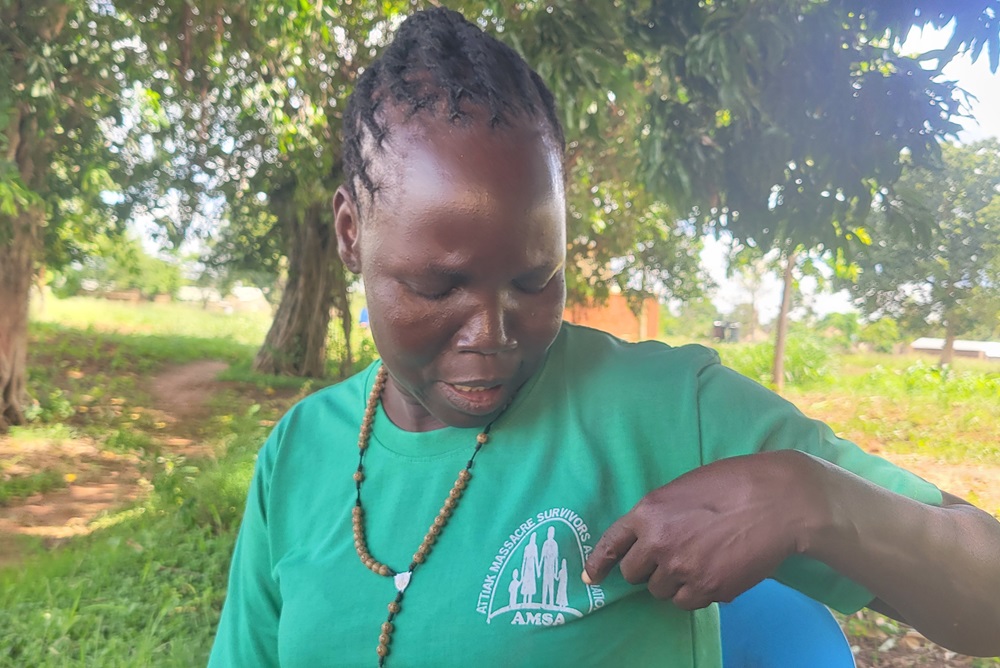
Amuru, Uganda: Thirty-one years after the Atiak massacre, survivor Christine Aketo says the trauma has never left her, haunted by memories of watching her relatives killed in front of her.
Now aged 52, Aketo recalls how rebels of the Lord’s Resistance Army forced captives to sing and clap as executions unfolded. “The screams still wake me up at night,” she said. “I saw my mother killed and heard her cry until she died. That memory has never left me.”
On April 20, 1995, LRA fighters commanded by Vincent Otti carried out one of the deadliest massacres in northern Uganda, killing at least 301 civilians in Atiak.
The attack remains one of several mass atrocities linked to the LRA insurgency, alongside massacres in Lukodi, Pajule, Abok, Barlonyo, and Omot during a brutal two-decade conflict that devastated northern Uganda.
Aketo says many survivors continue to suffer untreated trauma, with some dying without ever receiving compensation.

“Victims are dying day and night because they have lost hope of ever receiving compensation,” she said. “We need the government to tell us the truth. Are we going to be compensated, or have we been forgotten?”
Calls for Justice and Support
Survivors and leaders used this year’s commemoration to renew calls for government intervention, including compensation and psychosocial support.
Fred Okot, chairperson of the Atiak massacre memorial site, said the community must confront not only the physical scars of the past but ongoing socio-economic struggles.
“There was a physical massacre, but there is also an economic massacre, an educational massacre, and a moral crisis in Acholi,” he said. “We must address all of them if we are to rebuild.”
He urged local leaders and the business community to invest in rebuilding livelihoods and reducing poverty among survivors.
Kilak South MP Gilbert Olanya called for unity and meaningful support for affected families. “We must support the survivors to honour the memory of those who were killed. Only then can the community begin to heal,” Olanya said.
He noted that funds under the Peace, Recovery and Development Plan (PRDP IV) could help address long-standing challenges, including compensation and trauma healing.

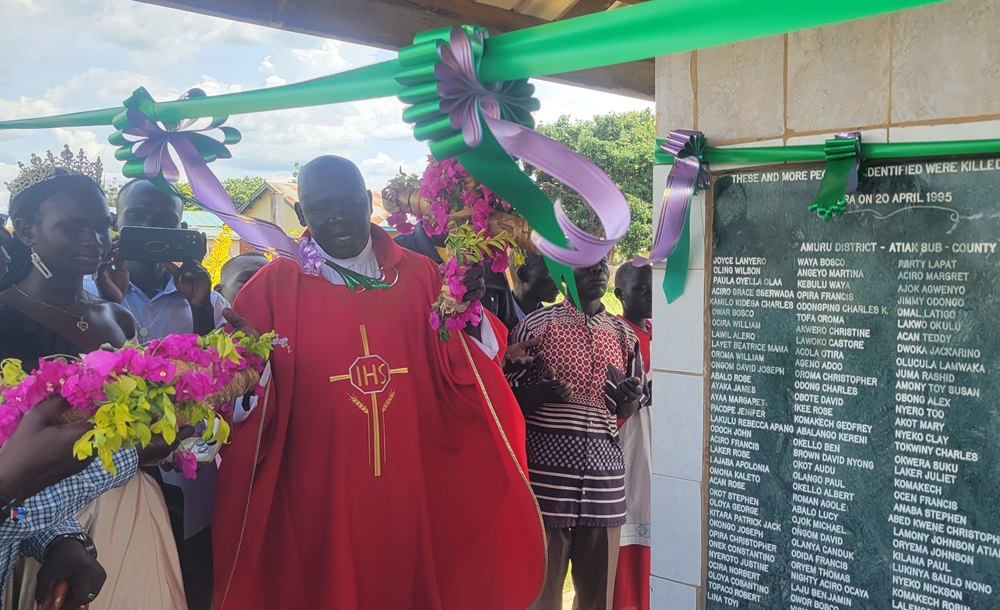
Civil society leaders say many survivors remain trapped in cycles of poverty and psychological distress.
Stella Lanam Angel, Director of War Victims and Children Networking, called for the establishment of an emergency fund to support affected families. “Many victims cannot even afford school fees for their children. The trauma is still fresh because their suffering has not been addressed,” she said.
Survivor Openytoo Lawrence Atodwong, 61, recounted how the rebels overran a military barracks before rounding up civilians at Ayugi River. “They separated some groups and ordered the rest to lie down. Then they started shooting,” he said, recalling how entire families were wiped out.
Another survivor, Amony Kevin, who was a child at the time, said she witnessed her father being shot during the massacre.
Struggles with Recovery Efforts
Government interventions over the years have fallen short of expectations among survivors. President Museveni previously donated 7,200 iron sheets to affected families, but many beneficiaries reportedly sold them due to lack of land and resettlement challenges.
A Shs50 million contribution to women’s groups has also had limited long-term impact, while a pledged memorial school, Lwani Memorial College, remains unfulfilled.
If you would like your article/opinion to be published on Uganda’s most authoritative news platform, send your submission on: [email protected]. You can also follow DailyExpress on WhatsApp and on Twitter (X) for realtime updates.