Kampala, Uganda: Government has defended a sweeping policy shift requiring medical students to complete internship before graduation, as tensions rise over unpaid allowances and welfare concerns among medical interns.
The Ministry of Health told Parliament that the reform, effectively extending medical training from five to six years, is aimed at safeguarding patient safety and restoring confidence in Uganda’s healthcare system.
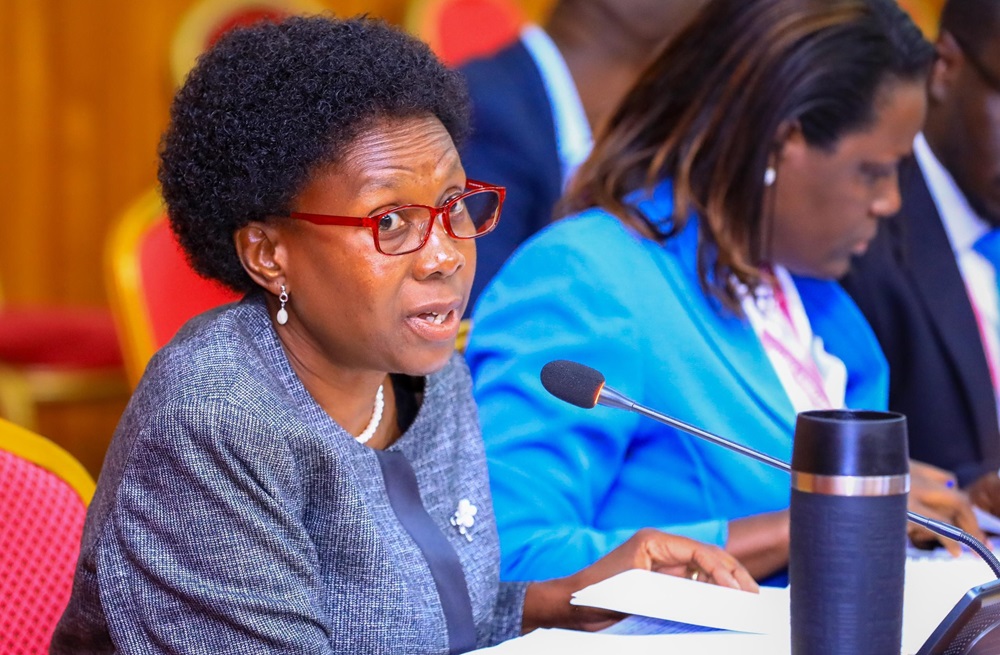
Appearing before the Health Committee, Health Minister Jane Ruth Aceng said the decision was triggered by repeated cases of graduates failing internship assessments despite already holding medical degrees.
“The challenge we have is interns graduating and being called medical doctors while still undergoing internship,” she said. “Some have failed internship three or four times, yet they already hold certificates. We must safeguard our population.”
Under the new policy, internship becomes a compulsory component of training before a degree is awarded—meaning only those who successfully complete supervised clinical practice will qualify as doctors.
“This is about life and death,” Aceng emphasized. “We must ensure that anyone graduating is fully competent to handle patients.”
Interns push back over pay, status
The reforms have, however, sparked strong resistance from the Federation for Uganda Medical Interns, which has petitioned Parliament over both the policy and long-standing welfare challenges.

Interns say many have gone unpaid since August 2025, raising serious concerns about financial strain and professional dignity.
“Medical interns must retain their status as pre-registered healthcare professionals, not students,” the association argued. “If you are not a student, you must be paid.”
They are demanding immediate clearance of salary arrears, a predictable monthly payment system, and improved working conditions, including accommodation and better-equipped hospitals.
Lawmakers on the Health Committee raised concerns about the financial burden the extra training year could place on students and families.
Bukomansimbi North MP Christine Nandagire questioned whether students would be required to pay additional tuition. “Parents signed up for a five-year program. Now it is six years—will they pay extra? Will interns be paid?” she asked.
Hon Nandagire also highlighted the intense working conditions faced by interns in public hospitals, urging government to prioritise their welfare. “You know how hard internship is. Why not ensure they earn at least UGX1 million as they complete their training?” she added.
System under pressure
Government says the reforms are also a response to structural challenges in medical training, including a sharp rise in training institutions.
Uganda now has more than 30 medical schools, most regulated by the Ministry of Education, complicating standardisation and oversight.

“With over 30 institutions, the number of interns has grown significantly. Managing these numbers is not easy,” Aceng told MPs.
Health experts warn that while stricter training could improve quality, it may also slow the pipeline of new doctors if capacity is not expanded.
Uganda continues to face a critical shortage of health workers, with doctor-to-patient ratios still far below World Health Organization recommendations. “This risks creating a bottleneck,” one public health analyst noted. “If you extend training without expanding placements and funding, shortages could worsen in the short term.”
The debate has also shifted to financing, with MPs warning that the policy cannot succeed without adequate resources.
Intern allowances, hospital infrastructure, and supervision capacity all depend on government funding approved through the national budget. “The policy cannot succeed without resources,” a committee member observed. “We must ensure interns are supported and facilities are equipped.”
The session also exposed broader tensions around health policy priorities, including a proposal to fund sanitary pad distribution in schools and prisons.
Minister Aceng rejected the proposal, arguing it falls outside the Health Ministry’s mandate.
“It is not a disease or a health condition,” she said, triggering debate among MPs over how government defines public health responsibilities.
The ongoing debate highlights a deeper dilemma within Uganda’s health sector—balancing the urgent need to expand the workforce with the equally critical need to maintain professional standards.
If you would like your article/opinion to be published on Uganda’s most authoritative news platform, send your submission on: [email protected]. You can also follow DailyExpress on WhatsApp and on Twitter (X) for realtime updates.