
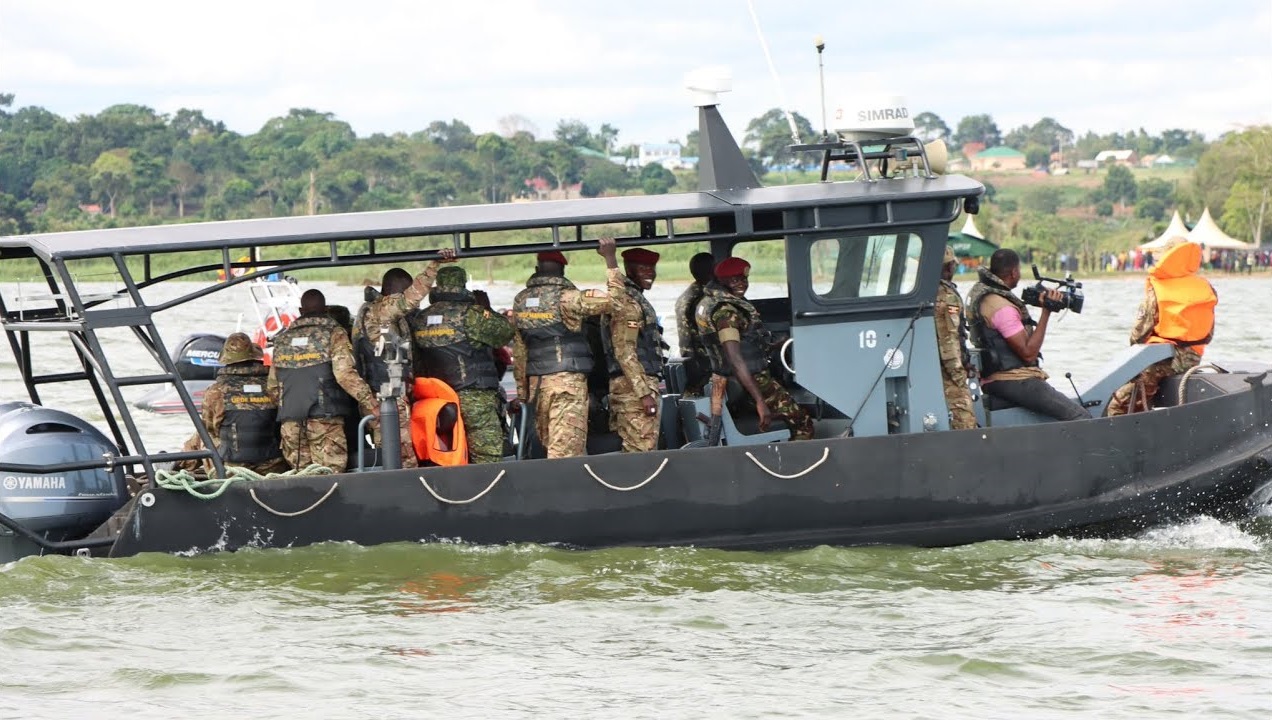
Amolatar, Uganda: The Uganda People’s Defence Force (UPDF) has unveiled strict new enforcement standards to curb illegal fishing, as the newly structured 155 Marines Battalion prepares to resume full-scale operations on Uganda’s lakes.
The move follows a December 23, 2025, directive issued by President Yoweri Kaguta Museveni, which ordered sweeping reforms in the management and security of water bodies.
The directive dismantled existing landing site structures, restructured enforcement mechanisms, and officially transitioned the former Fish Protection Unit into the 155 Marines Battalion under UPDF command.
Under the reforms, Lt Gen. Sam Okiding and Maj. Gen. Richard Otto were tasked with overseeing implementation and restoring order within the fisheries sector.
Addressing fishing communities at Kagago Landing Site in Namsale Town Council, Lt Gen. Okiding said the renewed operations are aimed at protecting fish stocks and enforcing sustainable fishing practices.

He issued a stern warning against illegal methods, including fishing in breeding zones, use of prohibited nets such as “kokota” and “kamamaji,” and silver fish (mukene) harvesting using artificial lights.
“Using light on water, fishing in breeding zones, or using illegal gear means you have booked yourself for up to eight years in prison,” Okiding warned.
Maj. Gen. Otto reinforced the crackdown, warning both soldiers and fishermen against corruption, which he said has long undermined enforcement efforts. “We have heard of fishermen bribing soldiers to avoid arrest. That is corruption, and it will not be tolerated. Both the giver and receiver will face the law,” Otto said.
He added that authorities will now rely on court orders to destroy confiscated illegal fish and gear, closing loopholes that previously enabled resale through corrupt networks.
UPDF legal officer Lt Col. Owen Kasimba outlined sweeping structural changes under the reforms. All Beach Management Units (BMUs) have been disbanded and replaced with new committees at landing site, sub-county, and district levels to improve oversight and accountability.
Among the key measures, each landing site will be limited to 100 fishermen, a maximum of 30 registered boats per site and mandatory possession of valid fishing licenses for all fishermen.

Local leaders expressed concern over the abrupt rollout. Namsale Sub-county LCIII Chairperson Rembo Onguu requested a one-month grace period to allow fishermen to adjust, but the request was rejected.
The reforms come amid longstanding concerns over declining fish stocks in Uganda’s lakes, largely attributed to illegal fishing practices, weak enforcement, and corruption.
Government has in recent years intensified efforts to protect fisheries, which are a critical source of livelihood and export revenue.
Officials say the latest changes are intended to restore sustainability, eliminate illegal practices, and professionalise lake management.
However, the strict enforcement approach is expected to test relations with fishing communities, many of whom depend on the lake for survival.
As operations resume, authorities insist there will be no compromise. “This is about protecting the future of our fisheries and livelihoods,” Okiding said. “The law will be enforced.”
If you would like your article/opinion to be published on Uganda’s most authoritative news platform, send your submission on: [email protected]. You can also follow DailyExpress on WhatsApp and on Twitter (X) for realtime updates.