
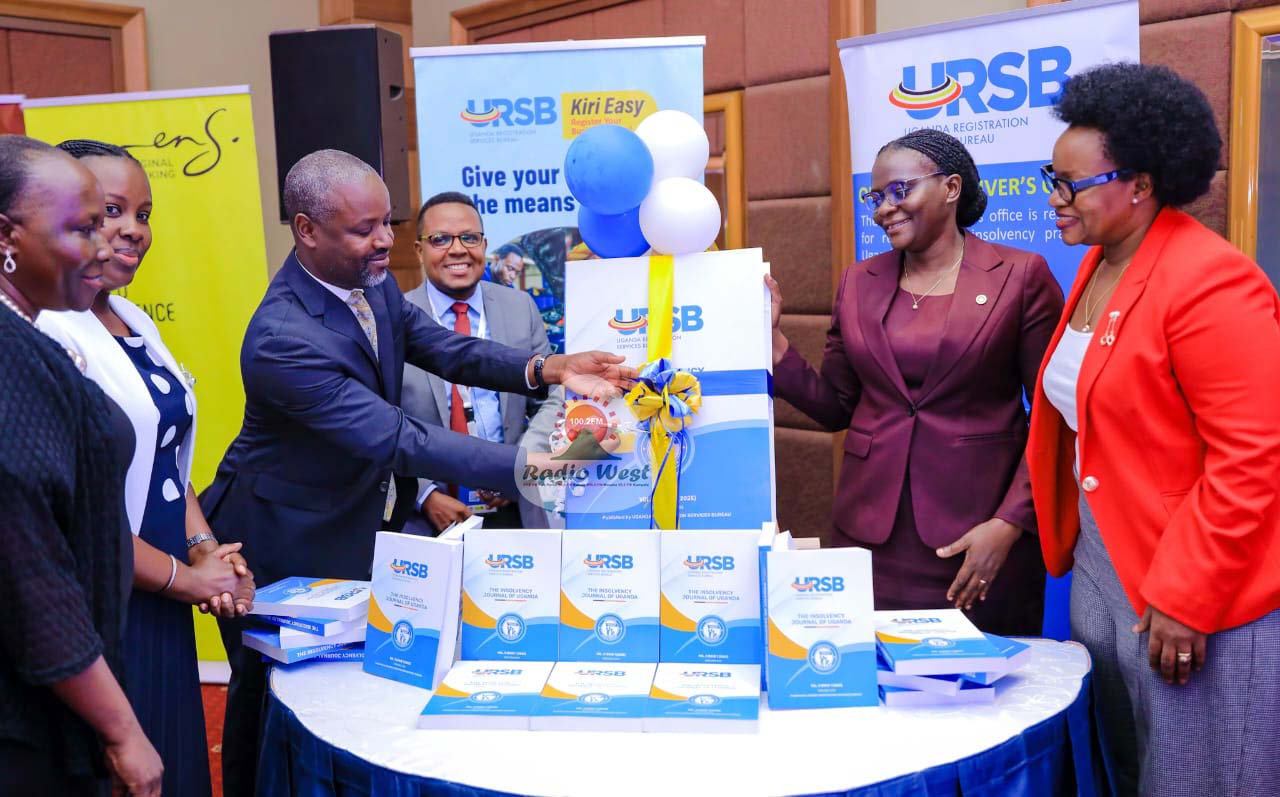
Kampala, Uganda: Uganda’s legal landscape has not been shaped in courtrooms alone. Increasingly, it is being moulded through registries, quasi-judicial rulings, institutional reforms and administrative decisions, particularly through the work of the Uganda Registration Services Bureau (URSB), the custodian of Uganda’s legal and commercial records.
At the heart of Uganda’s legal evolution lies a growing reality: law is not only enforced, but also registered, recorded and interpreted.
Through its management of company registrations, intellectual property, insolvency systems and ownership records, URSB has gradually become one of the most influential institutions shaping legal certainty, commercial trust and governance in Uganda.
Over the past five years, reforms have transformed URSB’s registers from passive record-keeping systems into active instruments of law, economic policy and dispute resolution.
But beyond reforms, it is through legal rulings and quasi-judicial decisions that these laws increasingly come alive.
The Rise of Quasi-Judicial Power
URSB’s expanding quasi-judicial mandate is steadily redefining how legal disputes are resolved in Uganda.
Rather than relying entirely on conventional courts, disputes involving trademarks, copyrights, companies and insolvency matters are increasingly being handled through administrative rulings that are often faster, more affordable and more accessible.
These decisions do more than resolve disputes between parties. They also clarify legal principles, shape future conduct and contribute to the growth of Ugandan jurisprudence.
It is partly for this reason that the URSB Case Digest was introduced, to ensure that important rulings contribute to legal consistency, institutional memory and broader legal awareness.
Intellectual Property Decisions Reshaping the Law

One of the most dynamic areas of legal development has been intellectual property law, where URSB rulings are increasingly influencing how creativity, innovation and ownership are protected.
In one landmark copyright dispute involving a musical work titled “You Want Another Rap?”, the Registrar addressed a complex legal question on whether modern works derived from traditional culture can enjoy copyright protection.
The ruling affirmed that derivative works can indeed qualify for copyright protection where sufficient originality exists through adaptation, arrangement or innovation.
The decision was widely viewed as striking a balance between preservation of cultural heritage and protection of creative expression.
Trademark rulings have equally strengthened legal principles surrounding distinctiveness, ownership and consumer confusion.
In the “Weatherguard” dispute, identical trademarks operating within the same industry were invalidated, reinforcing protections for prior rights holders.
Meanwhile, the “Toronto Raptors vs Monster Energy” matter clarified that trademark similarity alone is insufficient to establish infringement, and that factors such as context, industry and consumer perception must also be considered.
Collectively, these rulings are steadily shaping Uganda’s commercial law framework into a more balanced system that protects both innovation and fair competition.
Ownership, Identity and Local Legal Reality
Another major legal question increasingly addressed through URSB rulings concerns ownership of names, identities and long-term usage rights.
In the YMCA trademark dispute, the Registrar ruled that long-standing local usage could outweigh foreign registration claims, reaffirming that trademark rights are territorial and context-specific.
The decision strengthened the principle that Ugandan legal realities and market presence can supersede assumptions based solely on international brand recognition.

Institutional Reforms Supporting Legal Evolution
While individual decisions shape legal interpretation, broader institutional reforms have simultaneously strengthened Uganda’s legal infrastructure.
The introduction of Beneficial Ownership laws significantly improved corporate transparency and contributed to Uganda’s removal from the Financial Action Task Force (FATF) grey list.
Meanwhile, modernization of insolvency and company laws has strengthened business rescue mechanisms, creditor protection and corporate governance.
Expansion of the Security Interest in Movable Property Registry (SIMPO) has also widened access to credit and reshaped aspects of financial law and collateral management.
Together, these reforms demonstrate that legal decisions do not operate in isolation but are reinforced by institutional transformation and policy reform.
Law as a Living System
Taken together, these rulings and reforms reflect a deeper transformation within Uganda’s legal system.
Dispute resolution is gradually shifting toward specialised quasi-judicial systems, while legal interpretation is increasingly evolving through real-world commercial and intellectual property disputes.
Institutions like URSB are no longer functioning merely as administrative registries, but are steadily becoming active architects of Uganda’s legal and economic governance framework.
As reflected in recent institutional reports and reforms, the role of the registry has evolved from a back-office bureaucratic function into a central pillar supporting economic growth, investor confidence and legal certainty.
Ultimately, the story of legal decisions shaping Ugandan law is not simply about isolated cases. It is about a legal system steadily maturing through institutional innovation, deliberate reform and evolving jurisprudence.
In Uganda’s emerging legal order, every decision, whether involving a trademark, copyright, insolvency matter or corporate dispute, becomes part of the architecture shaping modern Ugandan law.
If you would like your article/opinion to be published on Uganda’s most authoritative news platform, send your submission on: [email protected]. You can also follow DailyExpress on WhatsApp and on Twitter (X) for realtime updates.