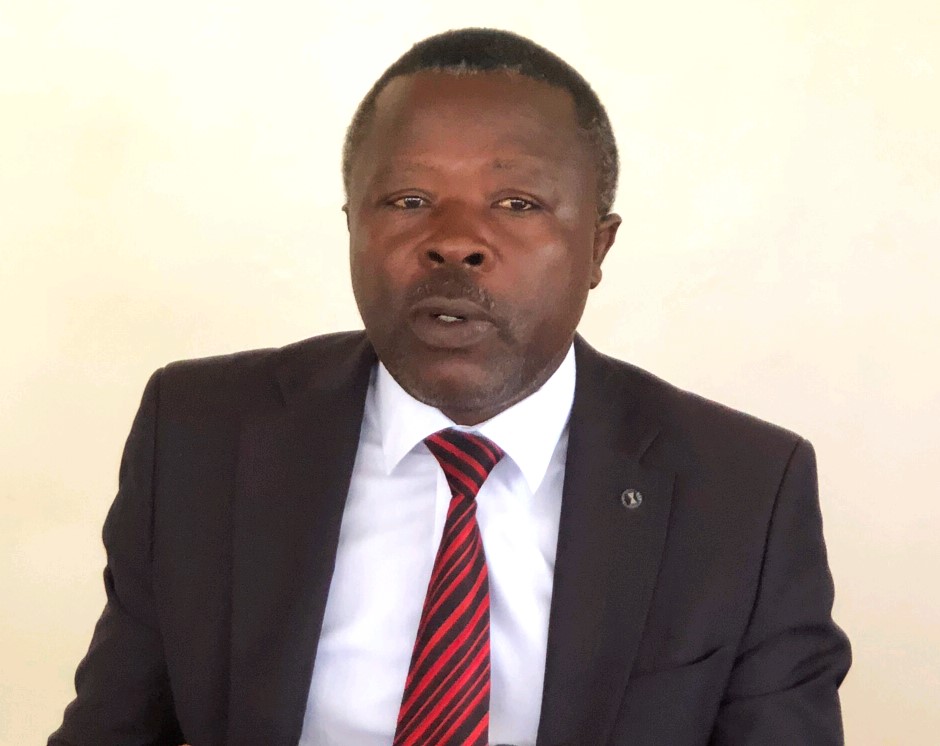
By Steven Masiga
I will lift a few lines from the Dutch national and republican philosopher Hugo Grotius in his book The Law of War and Peace, a self-confessed naturalist who gave the following guidance: abstain from that which belongs to other persons; restore to another any goods of his that we may have in our possession; fulfill pacts; and not inflict pain upon men and women who do not deserve it.
Our Bugisu ministers must not gloss over this philosophical guidance by one of the earliest proponents of the Natural School of Law in jurisprudence. The Bugisu region has now gotten two ministries which will soon be occupied by Hon. Simon Mulongo and Hon. Florence Nambozo Wanyoto. Again, I find the wordings of Charles Dickens instructive enough, especially that very famous line in the novel Oliver Twist: “Please, sir, I want some more.” Indeed, after welcoming the two state ministries, I find the line nostalgic.
Whereas the Bugisu region recently got two ministers appointed by President Museveni under his 2026–2031 mandate, there was a time when two ministers from Bugisu were knocked out of the state dining table due to corruption-related charges. Several interlocutors viewed this as an act of inequality and technically an affront to Article 21. But every thief has his own time, as it is always said.
The new entrants must reflect seriously on such previous unfortunate circumstances and should never follow that corrupt path that led to our daughters being flushed out of government by the Inspector General of Government and other punitive organs of the state.

Whereas several voices from sections of the Bamasaba community have stated that the two state ministries—that of Gender and Public Service—are insignificant, I personally beg to disagree with such a narrative.
Firstly, as a community and cultural institution, we are comfortable that our people, Hon. Wanyoto and Hon. Simon Mulongo, have been considered for appointment into Cabinet.
Secondly, just like in the famous Oliver Twist, where the hungry boy shouted after downing the first plate and spoke at the top of his voice, “Please, sir, I want some more,” clearly demonstrating that his appetite had not yet been satisfied, we can later, as a community, push for more ministers instead of outrightly glossing over what has been achieved.
With government proposing to increase the number of Cabinet ministers, who knows? Bugisu may secure more than the two ministries.
However, I am cognizant that ministers serve beyond their districts of origin, and we expect them to serve the whole country, of course beginning from home here in Bugisu.

We expect our newly appointed ministers to work closely with the cultural institution, including promoting the law that regulates traditional and cultural institutions in Uganda.
As a community, I have noted with concern that our people have limited knowledge as far as cultural leadership is concerned. To help cure this, continuous guidance and sensitization must be a responsibility of all state actors.
We encourage our people who have been appointed as ministers to hold the Bugisu flag higher than hitherto. Whereas Bugisu, during the 2021–2026 period, earned the unfortunate record of having the highest number of ministers knocked out of government over corrupt behaviour, just like the notorious character Fagin in Oliver Twist, this ignominious exit should serve as a strong reminder against criminal conduct.
The history of Bugisu in Cabinet appointments dates back to the 1960s. Bugisu has never had more than three ministers at a time. Wapakhabulo was there and was very powerful, while the only other minister was Hon. Beatrice Wabudeya and later Hon. Wasieba. In the early 1980s, we had Hon. Kuya and Hon. Nangwale appointed as Ministers of Rehabilitation and Works respectively.
Whereas I take concern that the Bugisu tribe or community is ranked alongside other major communities such as Ankole, Buganda and Acholi, this has not translated into several ministers being appointed from the region as is the case with Buganda or Ankole. Scholars must openly give this concern critical scholarly attention and recommendations.
The writer is the Spokesperson of the Bugisu Cultural Institution.