
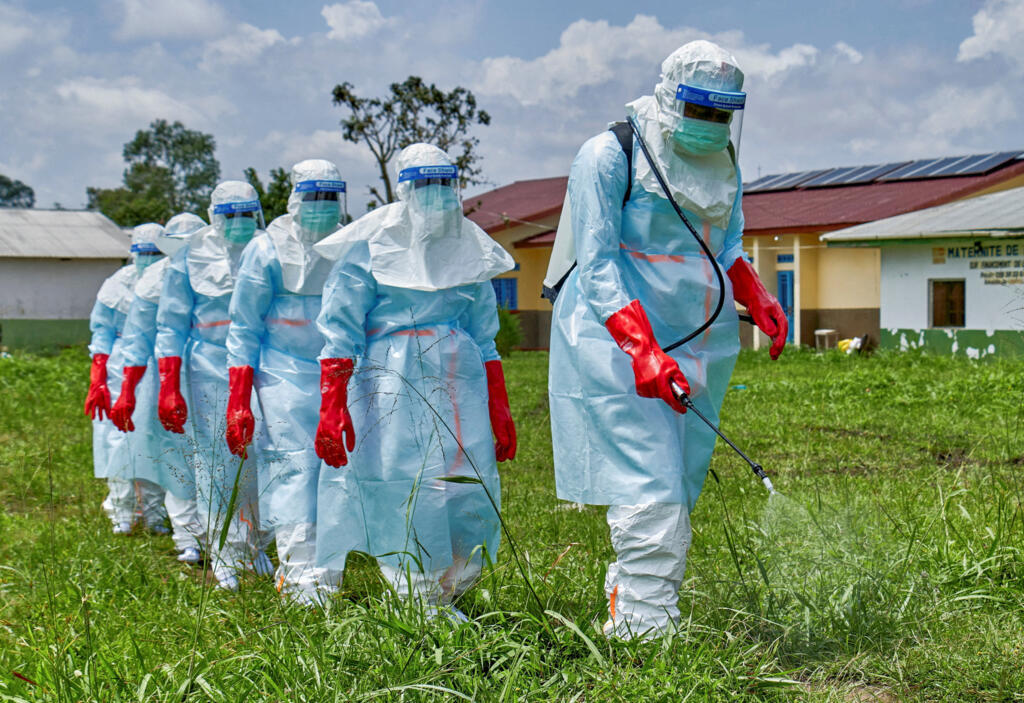
Kampala, Uganda: As Uganda’s President, H.E Yoweri Museveni, prepares to address the nation on the Ebola situation tonight, a human rights organisation has ignited debate over what it calls a longstanding failure by the international community to invest in vaccines for Ebola strains that primarily affect African populations.
The Human Rights Association (HRA) is now calling on G7 governments, the European Commission, and major international health donors to provide emergency funding for the development of a vaccine against the Bundibugyo ebolavirus, the strain currently responsible for the outbreak affecting Uganda and the Democratic Republic of Congo (DRC).
The appeal comes amid growing concern over the outbreak, which the World Health Organization (WHO) declared a Public Health Emergency of International Concern (PHEIC) on May 17, 2026. According to figures cited by the HRA, the outbreak had resulted in 363 confirmed cases and 62 deaths in DRC and 15 confirmed cases, including one death, in Uganda as of June 4. Cases have also been confirmed in Kampala.
Unlike the Zaire strain of Ebola, which has two approved vaccines, there is currently no licensed vaccine specifically targeting the Bundibugyo strain. There is also no approved therapeutic treatment or rapid diagnostic test for the virus.
For HRA, that gap is not merely a scientific challenge but a question of global health equity.
A Vaccine Gap Decades in the Making
The Bundibugyo strain was first identified during an outbreak in western Uganda in 2007. Since then, Uganda and neighbouring DRC have repeatedly experienced outbreaks caused by both Bundibugyo and Sudan ebolaviruses.

Yet while the international scientific community successfully developed vaccines against the Zaire strain following the devastating 2014-2016 West African epidemic, similar progress has not been achieved for the strains that have repeatedly affected East and Central Africa.
In its statement, the HRA Chairman, Saad Kassis-Mohamed, argues that the difference reflects broader disparities in global health research funding. The organisation notes that the West African outbreak generated unprecedented international concern after cases were detected in the United States, Spain, and the United Kingdom, prompting emergency investments that eventually led to licensed vaccines.
By contrast, the organisation says outbreaks affecting Uganda and DRC have not attracted the same urgency. “Uganda has had six Ebola outbreaks since 2000. There is still no vaccine for the strains that cause them,” Kassis-Mohamed noted.
“The international community developed two Ebola vaccines after the 2014 outbreak because it reached Western countries. It did not develop a vaccine for the strains that only kill Ugandans and Congolese. That is not a scientific gap. It is a political choice.”
Recent Progress, But Questions Remain
There have been recent developments that could eventually close the gap.
On June 1, the Coalition for Epidemic Preparedness Innovations (CEPI) announced that three investigational vaccine candidates targeting Bundibugyo ebolavirus would be fast-tracked for further development. However, none has yet entered human clinical trials.
For health experts, this represents a positive step, but one that arrives during an active outbreak rather than before it.
The HRA argues that the timing illustrates a broader problem in the global response system, where vaccine development often begins only after an outbreak has already become a crisis. “The PHEIC was declared eighteen days ago. The first vaccine candidate was only fast-tracked three days ago,” Kassis-Mohamed noted.

According to the organisation, the absence of medical countermeasures for Bundibugyo ebolavirus is incompatible with the right to health recognised under international law and raises questions about whether global health research priorities adequately reflect the needs of African populations.
The statement further points to Article 44 of the International Health Regulations, which requires member states to collaborate in responding to international public health emergencies. According to the HRA, such collaboration should extend beyond containment efforts to include financing research and vaccine development.
The group is calling for time-bound funding commitments to support Bundibugyo vaccine development, equitable access guarantees for Uganda and DRC, and similar investments in vaccines targeting Sudan ebolavirus, another strain that has repeatedly caused outbreaks in Uganda.
Uganda’s Immediate Challenge
While the vaccine debate unfolds, Uganda’s health authorities remain focused on containing the current outbreak. Health officials continue to rely on surveillance, contact tracing, isolation and supportive care as the primary tools for controlling transmission.
The challenge is particularly significant because the Bundibugyo strain can present symptoms similar to other viral illnesses during its early stages, making rapid identification difficult.
Authorities have intensified screening at border points, strengthened monitoring systems and increased public awareness campaigns as they seek to prevent further spread.
President Museveni’s expected address is likely to provide updates on the government’s response strategy, the status of confirmed cases and measures being taken to protect the public.
If you would like your article/opinion to be published on Uganda’s most authoritative news platform, send your submission on: [email protected]. You can also follow DailyExpress on WhatsApp and on Twitter (X) for realtime updates.