

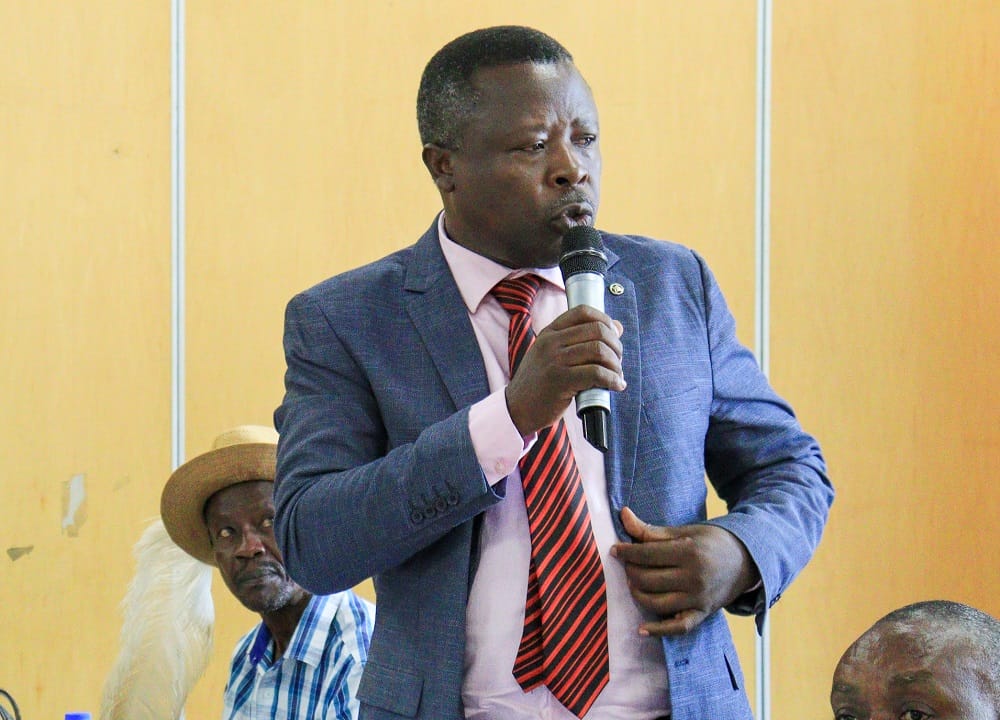
By Steven Masiga
It is a well-settled jurisprudential assumption that law cannot be understood without the social milieu in which it has developed. I will not hesitate to posit that, with patriarchal systems in communities still very visible, the human rights of women and other groups should not be sacrificed at the expense of patriarchal overlords.
It is not in dispute that informal justice systems, such as customary and traditional dispute resolution mechanisms, are more accessible and affordable than formal justice systems, though both international and national human rights standards must be emphasised. As somebody once said, law without local content is like blood without bowels.
Human rights must be fully observed in the implementation of the Alternative Justice System (AJS) so that the rights and assets of women, persons with disabilities (PWDs) and other vulnerable groups are respected.
Uganda does not have a comprehensive and uniform law on the Alternative Justice System. The nearest to this is the Arbitration and Conciliation Act. However, the Act appears to focus more on arbitration, especially disputes of a commercial nature, than on the Alternative Justice System.

Countries like Kenya, Rwanda and Ghana are more advanced in the formulation of legal frameworks and implementation of the Alternative Justice System. For example, the Abunzi reconciliation committees and the Gacaca courts have helped heal communities that were ravaged by conflict and disputes in Rwanda.
Cultural institutions must be central in the resolution of community disputes. Once they are properly supported, this will go a long way in addressing the infamous case backlog constantly discussed in judicial circles. Despite the fact that the Judiciary now has about 100 judges, case backlog remains a problem simply because communities feel that court is the only forum for dispute resolution. They need to be educated about alternatives outside formally sanctioned mechanisms.
The United Nations 2030 Agenda for Sustainable Development envisions a situation where, by 2030, there is universal access to justice for all communities.
If correctly utilised, the Alternative Justice System may turn out to be a panacea to the notorious court backlog that the Judiciary is grappling with. In Uganda, conservative estimates indicate that 95 percent of cases are resolved using the Alternative Justice System, while in Kenya the figure stands at about 90 percent. This demonstrates the significant role AJS plays in managing cases outside the formal court system.
However, unlike Alternative Dispute Resolution (ADR), which is mainly conducted with the guidance of courts of judicature, the Alternative Justice System is still lagging behind.
The Alternative Justice System has three pillars in its operations. Firstly, there are autonomous alternative justice mechanisms. This process is run entirely by the community, which selects and approves the third parties involved in resolving disputes.
The second pillar consists of third-party institutions, which may be state-sanctioned. Lastly, there is the court-annexed Alternative Justice System. This operates with manpower provided by courts and may involve a group of elders.

In Uganda, both Buganda and Acholi have performed well in alternative justice mechanisms. In Acholi, the Mato Oput reconciliation mechanism has been instrumental in resolving difficult murder cases, especially non-intentional killings (manslaughter), within and between communities. The Kanyamunyu case (Uganda v Kanyamunyu) is the latest high-profile example. There is also Poro Lok, which is Acholi for negotiation, and this technique helps restore social harmony among clans.
To make the Alternative Justice System a more effective tool in reducing court-related backlog, documentation and support of cultural institutions are important. There is, for example, no documented data on many of the disputes resolved by cultural institutions in Uganda. This is something that should be properly archived and judicial notice taken of such resolutions.
Under the Kenyan legal system, once parties choose to use AJS or ADR, they cannot later inconvenience the courts with the same petition on appeal. The matter must be entirely resolved through the chosen pathway.
Whereas I take cognisance of the fact that the Alternative Justice System is entirely independent from other forms of dispute resolution such as Alternative Dispute Resolution, there is still a nexus between the two.
The cultural institutions that are now champions of promoting the Alternative Justice System in the country, as envisioned under the Judiciary’s 2023 strategy, need a legal instrument of their own to roll out this programme meaningfully. This should take the form of an Act of Parliament so that courts can take judicial notice of such pronouncements. We do not need competing legal frameworks.
An evaluation of the current efforts on the Alternative Justice System appears to promote Alternative Dispute Resolution instead of the Alternative Justice System itself.
The writer is the Spokesperson of the Bugisu Cultural Institution and an interdisciplinary legal scholar.
If you would like your article/opinion to be published on Uganda’s most authoritative news platform, send your submission on: [email protected]. You can also follow DailyExpress on WhatsApp and on Twitter (X) for realtime updates.


