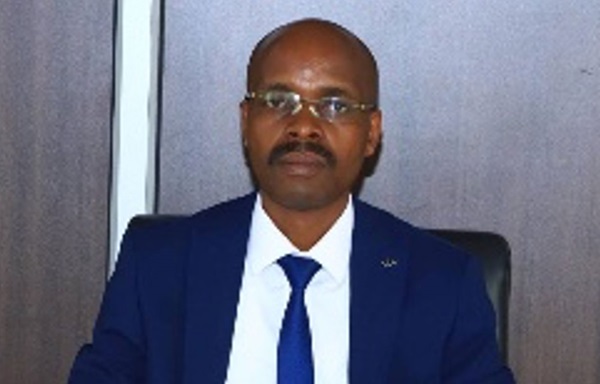
By Albinious Twesigomwe
Following Uganda’s 2026 General Elections, the country has entered a new phase of leadership and governance. As leaders settle into office, we as Ugandans must reflect honestly on one of the greatest obstacles to our national progress—corruption.
Whenever corruption is discussed, attention is often directed at politicians, civil servants and government institutions. While leaders must be held accountable, as citizens we must also examine our own role in sustaining a culture that sometimes encourages corruption.
I will make my case largely focusing on Members of Parliament. These are constitutionally mandated to make laws, represent constituents, oversee government expenditure, and ensure service delivery and accountability in public institutions (oversight). However, many voters expect these leaders to pay school fees, settle medical bills, contribute to funerals, support church projects, sponsor youth activities, repair roads, and provide personal financial assistance to individuals and communities.
These expectations arise from genuine social and economic challenges facing many Ugandans. However, they have also created an unhealthy political environment. During elections, candidates often spend enormous sums of money on voters, while after elections many leaders receive daily requests for financial support. Yet no public servant’s salary can sustainably meet the demands of an entire constituency.
The question we must ask ourselves as Ugandans is simple: If a leader spends billions seeking office and is continuously pressured to provide money after election, where do we expect that money to come from? In many cases, such pressure creates fertile ground for bribery, abuse of office, kickbacks and misuse of public resources.
The consequences are visible everywhere. Corruption contributes to poor service delivery, delayed infrastructure projects, inadequate healthcare, youth unemployment, poor roads, and the loss of public funds that should be improving people’s lives. Every shilling lost through corruption is a shilling taken away from schools, hospitals, agriculture, security and national development.
President Yoweri Museveni and Gen. Muhoozi Kainerugaba, the Chief of Defence Forces and Senior Presidential Advisor on Special Operations, have consistently emphasized the need to eliminate corruption and strengthen accountability across government institutions. However, the fight against corruption cannot be left to them and a few state agencies alone. It must also begin with us citizens.
Ugandans must stop judging leaders by the amount of money they distribute at funerals, weddings, church fundraisers and community events. Instead, leaders should be evaluated based on their integrity, performance, service delivery and ability to advocate for policies that improve the lives of citizens.

The quality of leadership we get depends largely on the standards we set as voters. If we continue rewarding handouts over accountability, we risk electing leaders who view public office as an investment to be recovered rather than a responsibility to serve.
Uganda possesses enormous potential for economic growth through agriculture, industrialization, trade, innovation and wealth creation initiatives. As citizens, we should increasingly embrace self-reliance, productivity and sustainable income generation rather than depending entirely on politicians for personal survival.
The fight against corruption is therefore a shared responsibility. Leaders must uphold integrity, but citizens must also reject the culture that encourages corruption. Uganda will only achieve its full potential when both leaders and we, the voters and the public, commit ourselves to accountability, patriotism, hard work and responsible citizenship.
The writer is a Risk Reduction Specialist and Political Commentator. E-mail: [email protected] / Tel: +256 772098594
If you would like your article/opinion to be published on Uganda’s most authoritative news platform, send your submission on: [email protected]. You can also follow DailyExpress on WhatsApp and on Twitter (X) for realtime updates.