
Kampala City, Uganda: Only five percent of Ugandans are covered by formal social insurance schemes such as the National Social Security Fund (NSSF) and pension programmes, leaving millions exposed to poverty, illness, disability, unemployment, and climate-related shocks.
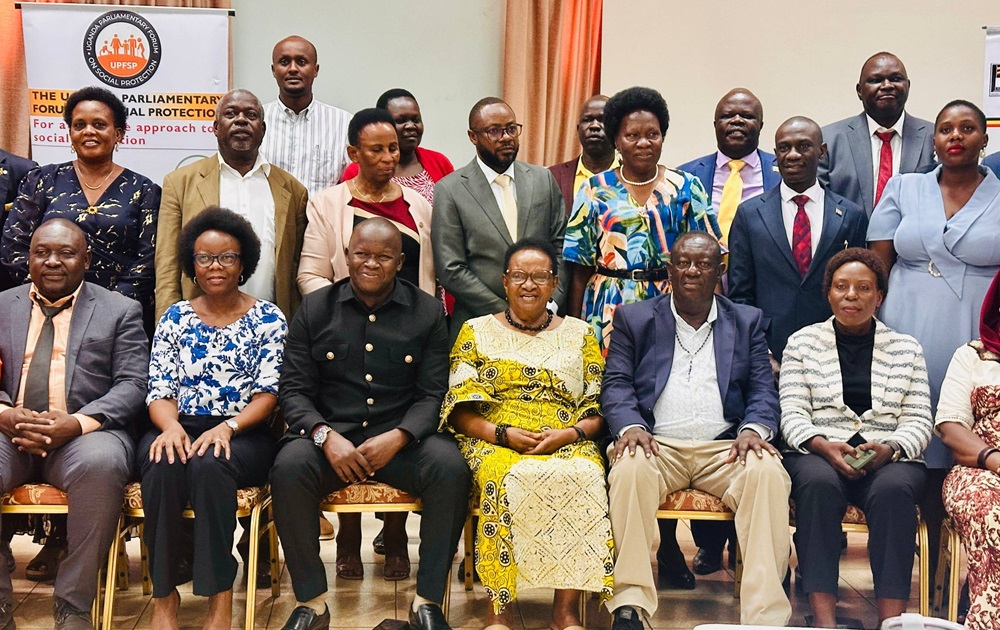
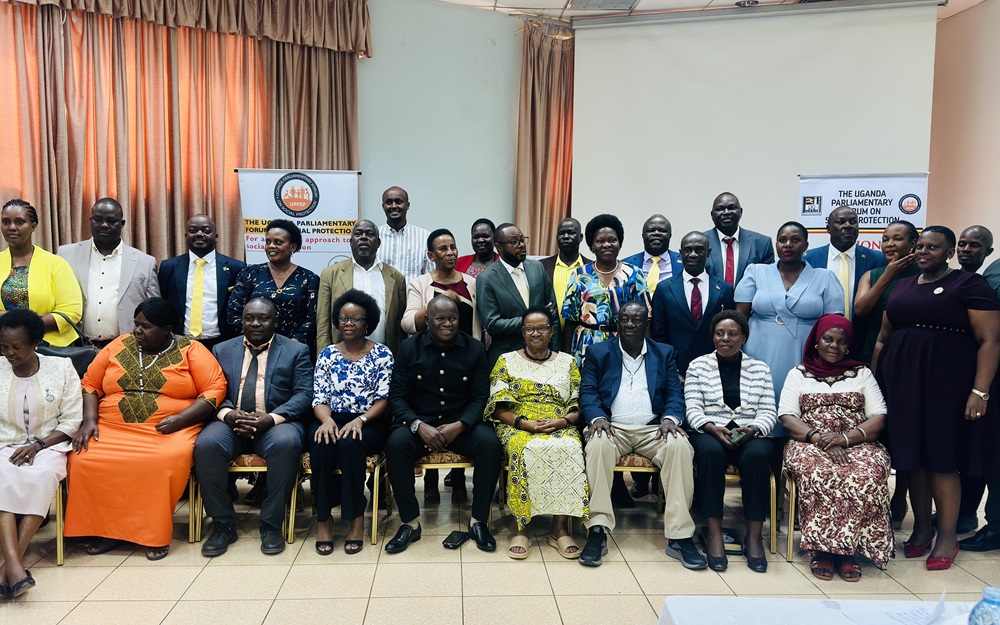
The alarming statistic emerged during a study workshop for Members of the 12th Parliament on social protection advocacy and dissemination of findings from a socio-economic status survey targeting refugees and host communities. The workshop was organised by the Uganda Parliamentary Forum on Social Protection (UPFSP), the International Labour Organization (ILO), and the Ministry of Gender, Labour and Social Development.
The findings reignited calls for Parliament and government to accelerate reforms aimed at expanding social protection coverage and strengthening safety nets for vulnerable populations.
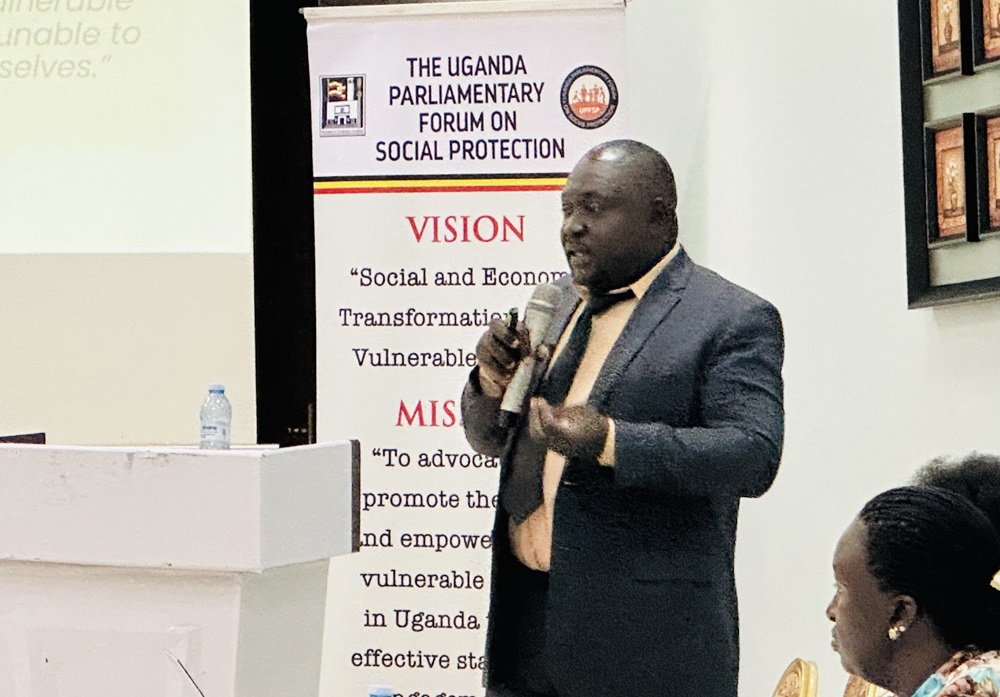
Speaking at the workshop, Paul Onapa, Deputy Head of the Expanding Social Protection Programme (ESP) at the Ministry of Gender, Labour and Social Development, said Uganda faces mounting social and economic vulnerabilities that require urgent policy interventions.
“Social protection is a human right. It is not tokenism. It is not just giving out cash. Cash is only one way of delivering social protection,” Onapa said. “It is about protecting, preventing, and building resilience so that even when people face drought, illness, disability, or the loss of a breadwinner, they can still cope with dignity.”
He further noted that Uganda’s youthful population presents both opportunities and challenges, with approximately 50 percent of citizens below the age of 17 and 73 percent below 30 years.
According to ministry data, 46 percent of Uganda’s youth are neither in employment, education nor training (NEET), while more than 70 percent of Ugandans cannot afford a healthy diet. Additionally, 29 percent of children are malnourished, 26 percent are stunted, while 12 percent of Ugandans are living with disabilities.

Onapa also revealed that only 2.5 percent of Ugandans above pensionable age receive pensions, while health insurance coverage remains below three percent, exposing millions to poverty resulting from illness and economic shocks.
Refugees, Host Communities Face Growing Vulnerabilities
The workshop also examined the growing socio-economic challenges facing Uganda’s refugee-hosting communities.
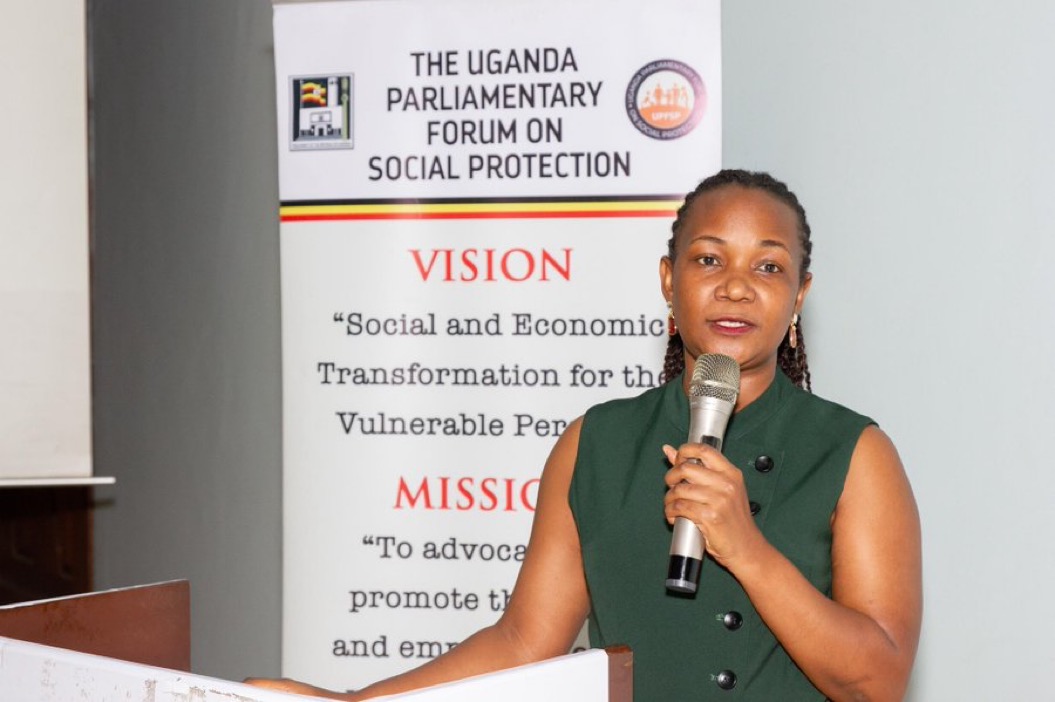
Presenting findings from a survey conducted in Terego, Madi-Okollo, Isingiro, and Kampala (the top hotspots of refugees in the country), UPFSP Communications and Advocacy Officer Gloria Nakajubi said the study revealed widespread economic vulnerability among both refugees and host communities.
According to the findings, 75 percent of respondents earn less than Shs250,000 per month, while 51 percent reported having no savings at all.
Nakajubi said 64 percent of households experienced a major shock in the previous year, with health and livelihood-related challenges ranking highest. “Sixty-nine percent of respondents were unaware of contributory social security schemes, while 86 percent had never heard of non-contributory social protection programmes,” she said.
The survey also found that despite low awareness levels, 66 percent of respondents expressed willingness to join social security schemes if products were tailored to their needs through flexible contribution models and mobile money platforms.
Uganda currently hosts nearly two million refugees, making it Africa’s largest refugee-hosting nation, and Ms Nakajubi stressed the need to integrate refugees and host communities into national social protection systems to enhance resilience, economic inclusion, and social cohesion.
MPs Demand Stronger Social Protection Reforms
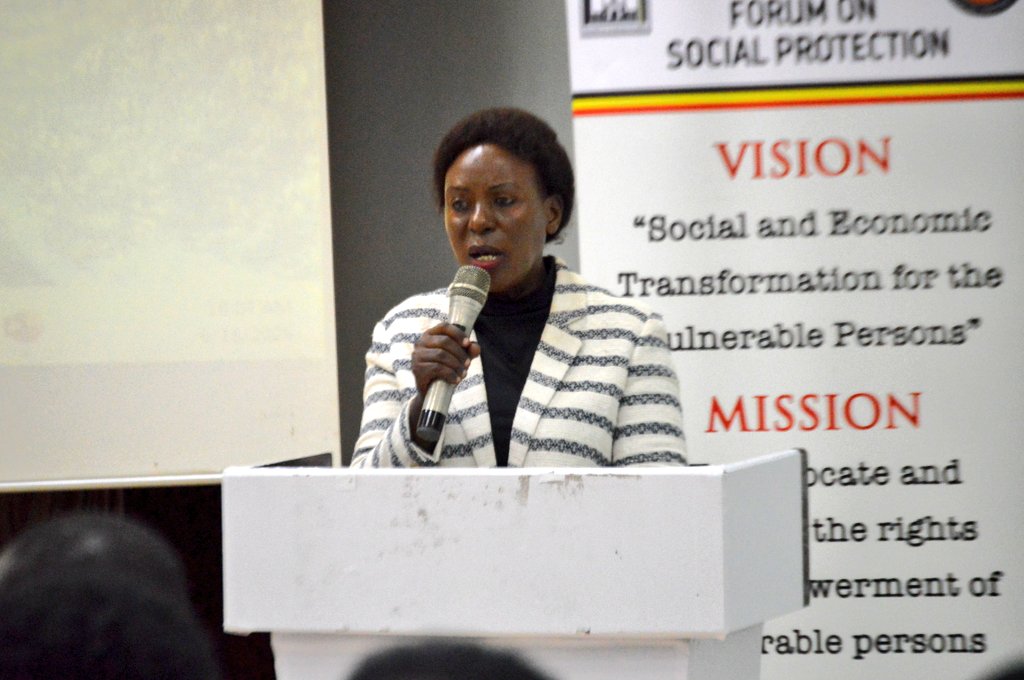
Earlier, former Kyegegwa Woman MP, Hon. Flavia Rwabuhoro Kabahenda, who is also the outgoing Chairperson of the Uganda Parliamentary Forum on Social Protection, challenged legislators to champion social protection as a constitutional right rather than a privilege.
“We are not asking for a favour. We are asking for a right that is in the Constitution. It is a right for the people of Uganda to live in dignity,” Hon Kabahenda said.

She urged Parliament to broaden social protection interventions beyond older persons to include children, persons with disabilities, informal workers, women, refugees, and other vulnerable groups.
Adding to her voice, Hon. Patrick Kiconco Katabazi, MP for Rukiga County and UPFSP coordinator, highlighted gains made through parliamentary advocacy, particularly under the Senior Citizens Grant (SAGE) programme.
Katabazi noted that SAGE, which started as a pilot project in 14 districts in Northern Uganda, has since expanded nationwide and now receives more than Shs121 billion annually from the Government of Uganda.
He also revealed that government plans to introduce a Child Disability Grant in the next financial year, fully financed through the national budget.
“We are proud that social protection is no longer a donor programme. The Government of Uganda is increasingly taking ownership and financing these interventions,” Katabazi said.
Revieve National Health Insurance Scheme
The discussions also renewed calls for the operationalisation of Uganda’s National Health Insurance Scheme, widely viewed as a missing pillar within the country’s social protection framework.
Although Parliament passed the National Health Insurance Scheme Bill in 2021, implementation stalled after the legislation failed to secure presidential assent and remains under review, and MPs were urged to revive the push for the bill to pass with necessary amendments.
Advocates argue that operationalising the scheme would significantly reduce the number of households pushed into poverty by medical expenses while improving access to healthcare for millions of Ugandans.
The workshop concluded with a call for stronger legislative action, increased public awareness and sustained government investment in social protection programmes as Uganda seeks to build resilience among its most vulnerable populations.
If you would like your article/opinion to be published on Uganda’s most authoritative news platform, send your submission on: [email protected]. You can also follow DailyExpress on WhatsApp and on Twitter (X) for realtime updates.