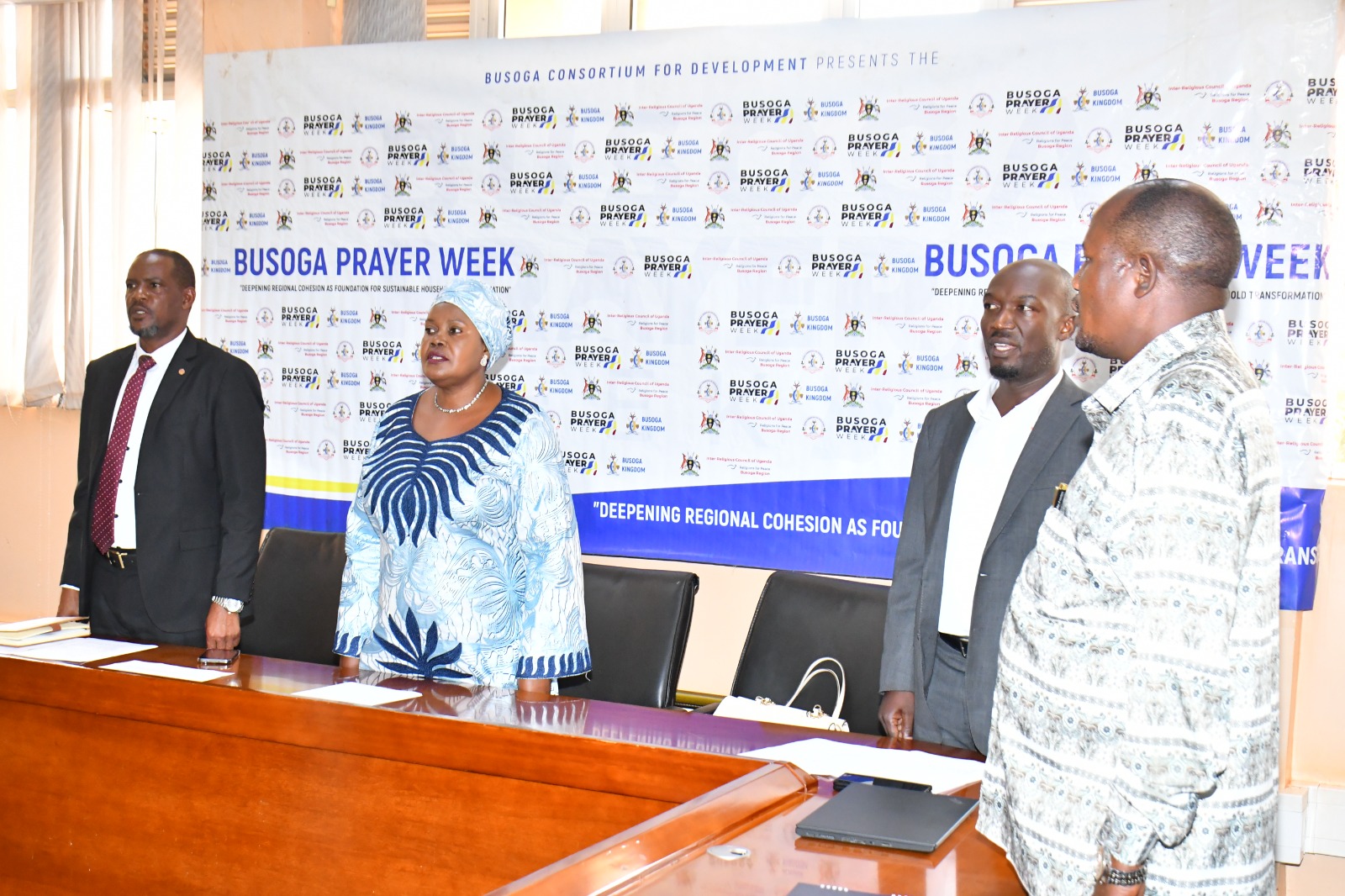
Jinja, Uganda: Busoga leaders have unveiled an ambitious seven-point development blueprint designed to transform the sub-region into Uganda’s leading rural economy by 2030, with the annual Busoga Prayer Week now repositioned as a platform for driving socio-economic transformation alongside spiritual renewal.
The roadmap was unveiled on Wednesday, July 29, 2026, during the launch of preparations for the Fourth Busoga Prayer Week at the Civil Service College in Jinja.
The week-long event will run from September 21 to 27, 2026, culminating in a regional prayer gathering at Mayuge District headquarters on September 27.
Speaking at the launch, Third Deputy Prime Minister Rukia Nakadama said the annual interfaith initiative has evolved into a regional mobilisation platform that seeks to unite political, religious, cultural and development leaders behind a shared economic vision.
“This year we are not merely repeating a ritual; we are elevating our ambition,” Nakadama said.
She stressed that Busoga’s transformation will require communities to combine spiritual commitment with practical action. “Prayer without work is incomplete. Faith must be accompanied by enterprise, hard work, integrity and strategic planning,” she added.

The seven pillars of Busoga’s transformation
Under the theme “Laying the Foundation for Busoga as a Model, Leading Economy for Uganda by 2030,” drawn from Nehemiah 2:18, leaders identified seven priority sectors expected to accelerate the region’s socio-economic development.
The strategic pillars include:
- Commercial agriculture to increase household incomes and agricultural productivity.
- Education and skills development to build a competitive and productive workforce.
- Tourism, culture and heritage to unlock Busoga’s untapped tourism potential.
- Environmental sustainability through conservation and climate resilience.
- Industrialisation and private sector development to create jobs and add value to local products.
- Health improvement to enhance productivity and community wellbeing.
- Tracking government commitments to ensure key infrastructure and development pledges for Busoga are implemented.
Nakadama said the priorities complement both the Government’s National Development agenda and the Busoga Consortium for Development (BCD) strategy of attaining middle-income status by 2030.
She also urged religious leaders to actively promote wealth creation initiatives such as the Parish Development Model (PDM), Emyooga, and commercial agriculture while encouraging parents to keep children in school.
Busoga Consortium for Development Director General Dr. Anthony Mula said the initiative, launched in 2022, has steadily evolved beyond an annual religious gathering into a coordinated regional development movement.
Although the 2025 edition was postponed because of political activities, he said the 2026 event returns with renewed focus on measurable development outcomes.
“Since then, Busoga has continued to evolve, rebrand and reshape for better,” Dr. Mula said. “We believe socio-economic transformation cannot be achieved in isolation. It requires the alignment of spiritual guidance, administrative leadership, strategic planning and active community participation.”

He said bringing together government, religious institutions, development partners, academia and the private sector creates a stronger foundation for sustainable growth.
Representing the BCD Inter-Religious Council, Busoga East Bishop Hanington Suubi called on families to prioritise children’s education, warning that the region cannot achieve its development aspirations without an educated population.
“Let us encourage our communities to provide food for learners in schools. If our children do not study, Busoga will be left behind,” Bishop Suubi said.
Former Busoga Prayer Week Chairperson Stephen Kisa highlighted several achievements recorded by the Busoga Consortium for Development since 2021, including strengthening regional governance structures, promoting the Village Agricultural Model, reviving chilli and soya production, opening export opportunities to China, supporting education scholarships, expanding health programmes and promoting tourism.
He said those gains demonstrate that collaboration among leaders can deliver tangible socio-economic progress.
The 2026 edition in Mayuge is expected to consolidate those gains while accelerating Busoga’s campaign to become Uganda’s leading rural economy by the end of the decade.
The Busoga Prayer Week is an annual interfaith initiative coordinated by the Busoga Consortium for Development (BCD), bringing together religious leaders, political leaders, cultural institutions, development partners and communities to promote unity and mobilise residents around shared development priorities.
Since its inception in 2022, the initiative has increasingly integrated spiritual renewal with practical programmes aimed at improving livelihoods, education, agriculture, health and regional competitiveness.
If you would like your article/opinion to be published on Uganda’s most authoritative news platform, send your submission on: [email protected]. You can also follow DailyExpress on WhatsApp and on Twitter (X) for realtime updates.