

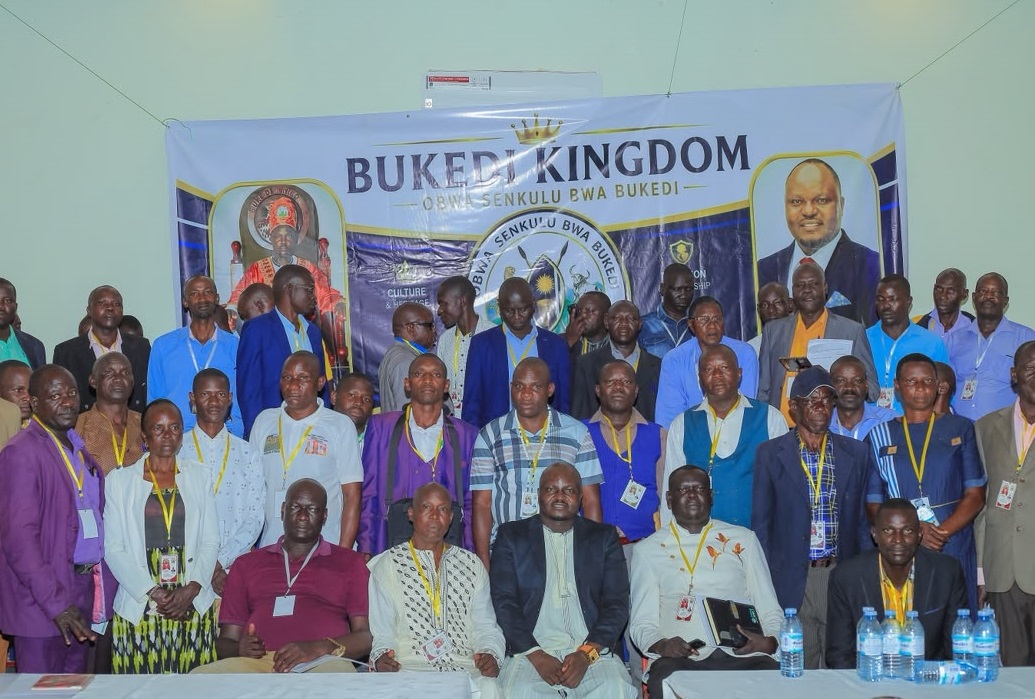
Pallisa, Uganda: The team spearheading the restoration of the proposed Bukedi Kingdom has broken its silence over growing public debate surrounding the initiative, publishing a detailed historical account which it says explains the institution’s origins and justifies its quest for official government recognition.
The statement, dated July 29, 2026, was issued from Pallisa by Tenywa Alexander, Head of Protocol and spokesperson for the Obwa Senkulu Bwa Bukedi restoration initiative. It comes amid increasing public discussion across the Bukedi sub-region, where the proposed kingdom has attracted both support and criticism.
Supporters describe the initiative as the restoration of a historical kingdom that once united communities across Bukedi, while critics argue that Bukedi was historically known as a chiefdom or administrative region rather than a kingdom.
According to the restoration committee, the name Bukedi originated from Lukedi, whom it identifies as the ancestor of the Bakedi people. The statement claims that Bukedi had an organised hereditary leadership dating back to the 18th Century under Wakida Mulalaka, who was succeeded by his son Lyada Ndoboli I as Senkulu in the 1840s.
The committee says Lyada Ndoboli I expanded the institution and established his royal seat at Namukaluke-Kadama in present-day Kibuku District.
The statement further recounts that Semei Kakungulu Lwakarenzi arrived in Bukedi in 1902 and was initially welcomed by Lyada Ndoboli I to spread Christianity and promote governance.
However, the committee alleges that Kakungulu later advanced British colonial interests in Bukedi and Busoga, resulting in disagreements with the traditional leadership.

According to the statement, Lyada Ndoboli I died in 1904 and was succeeded by his son Mubale Kabandamawa, who was later arrested by the British colonial administration and imprisoned at Kirinya Prison in Jinja, where he reportedly died in 1915.
The committee argues that these events weakened the institution and ultimately fragmented Bukedi into several chiefdoms.
It further states that although the National Resistance Movement government restored traditional and cultural institutions following constitutional reforms in 1993, Bukedi was never restored because of fragmentation, loss of identity and the absence of a unified voice.
The committee says efforts to revive the institution gained momentum on December 14, 2019, when Patrick Pangoli Ndoboli II, whom it describes as a grandson of Lyada Ndoboli I, was culturally installed as Senkulu of Bukedi.
According to the committee, the restoration initiative is pursuing official recognition under Article 246 of the 1995 Constitution, the Traditional and Cultural Leaders Act, 2011, and the Local Government Act.
However, it acknowledges that the proposed Bukedi Kingdom has not yet been gazetted or formally recognised by the Government and is still seeking a Certificate of Recognition from the Ministry of Gender, Labour and Social Development.
The statement identifies the initiative’s current leadership as:
- His Royal Highness Patrick Pangoli Ndoboli II – Senkulu
- Rt. Hon. Dr. Keddi Steven Eric Zuluha – Prime Minister
- Mangeni Dirisa – Chairperson of the Steering Committee
- A Council of Elders drawn from clans across the Bukedi sub-region.
The committee says the proposed institution seeks to unite communities including the Bagwere, Japadhola, Iteso, Samia and others under one cultural umbrella to promote peace, preserve cultural heritage and advocate for regional development.

It also says the kingdom intends to revive the spirit of the former Bukedi Cooperative Union, promote indigenous languages, organise cultural festivals, establish kingdom SACCOs, support youth vocational training, document cultural heritage sites and undertake community health outreach programmes.
The statement acknowledges the existence of other recognised and emerging cultural institutions within the region, including the Bugwere Royal Kingdom, Tieng Adhola Cultural Institution, Samia Bugwe Cultural Institution, and the Banyole Cultural Institution, but argues that none represents the entire Bukedi sub-region.
Bishop disputes kingdom narrative
The committee’s historical account has, however, attracted criticism from some leaders.
Speaking to DailyExpress during the 9th Lugwere Bible Day celebrations at Kibuku Primary School on the same day, Rt. Rev. Samuel George Bogere Egesa, Bishop of Bukedi Diocese, said he had never known Bukedi as a kingdom.
The bishop, who said he was born in Busia District and has lived in the Bukedi sub-region for more than six decades, maintained that Bukedi has historically been known as a chiefdom. “I have never heard of the Bukedi Kingdom. What I have always known is Bukedi Chiefdom,” Rt. Rev. Egesa told DailyExpress.
He described the ongoing restoration campaign as a recent development and expressed his personal opinion that political interests could be influencing the initiative. “The whole of this thing is something that is now being organised. In my opinion, there are people behind it with political intentions,” he said.
His remarks add another perspective to an issue that continues to generate debate across the Bukedi sub-region.
While supporters argue that Bukedi was an ancient hereditary kingdom whose evolution was interrupted during colonial rule, critics continue to question both the historical evidence presented and the legal basis for its proposed restoration.
With the restoration committee continuing consultations with cultural leaders, clan heads, local governments and the Ministry of Gender, Labour and Social Development, the fate of the proposed Bukedi Kingdom will ultimately depend on whether the Government grants it formal recognition.
Editor’s Note: The historical account contained in the restoration committee’s statement represents the committee’s own interpretation of Bukedi’s history. DailyExpress has not independently verified these historical claims, and they remain the subject of public and scholarly debate.


