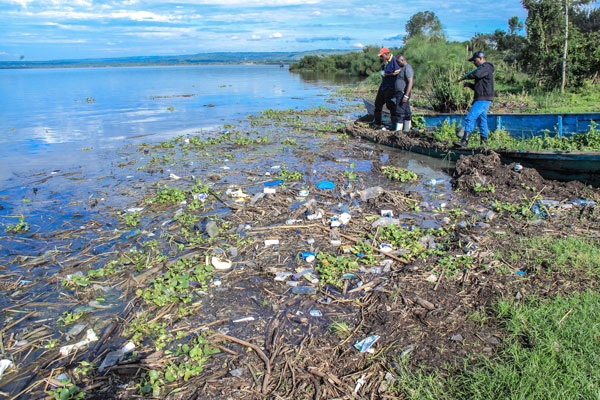
Kampala, Uganda: International Conservation Activist, the Saad Kassis-Mohamed Center has announced a commitment to fund the removal of 100,000 litres of plastic waste and microplastic-bearing debris from the Ugandan shoreline of Lake Victoria, as part of its wider one-million-litre global conservation campaign.
The initiative is aimed at addressing growing concerns over plastic pollution in Africa’s largest freshwater lake, which supports the livelihoods of more than 40 million people across Uganda, Kenya and Tanzania and serves as the source of the River Nile.
In a statement released in June 2026, the South Africa-based center said the intervention is intended to contribute to ongoing efforts to protect one of the world’s most important freshwater ecosystems from mounting environmental pressures linked to plastic pollution and waste management challenges.
Lake Victoria, covering approximately 69,485 square kilometres, is the world’s largest tropical lake and the second-largest freshwater lake by surface area. The lake supports fishing, transportation, trade and domestic water needs for millions of people across East Africa.
The center noted that Lake Victoria’s fisheries remain among the most economically significant inland fisheries globally, directly employing an estimated 100,000 people while supporting more than two million others through fish processing, trade and related activities. Fish from the lake account for more than 60 percent of total fish catches in both Uganda and Kenya and remain a critical source of dietary protein for many households.

Environmental experts have increasingly raised concerns about the impact of plastic waste on the lake’s ecological health.
According to research cited by the center, a 2020 scientific study found that polyethylene from plastic bags, wrappers and films accounted for 60 percent of microplastic particles analysed in northern Lake Victoria. Another 2021 expedition across 13 sites in Uganda, Kenya and Tanzania detected microplastics at every location sampled, with more than 60 percent of collected fragments classified as microplastics. Earlier monitoring also found that approximately one in five fish sampled from the lake had ingested plastic.
The statement further highlighted Uganda’s broader plastic waste management challenge.
The National Environment Management Authority (NEMA) estimates that Uganda generates approximately 600 metric tonnes of plastic waste daily, with less than 40 percent properly collected and managed. The remainder often ends up in drainage channels, wetlands and water bodies, including Lake Victoria. Kampala alone is estimated to generate around 100 metric tonnes of plastic waste each day.
Communities living along the lake’s shoreline continue to experience the direct consequences of the pollution burden.
Landing sites such as Ggaba, Kasensero, Lambu and Port Bell regularly contend with plastic bottles, polythene bags and discarded fishing gear washing ashore. The pollution has also increased the cost of water treatment and affected fishing communities that depend on the lake for their livelihoods.

The center noted that Lake Victoria’s pollution challenge extends beyond Uganda’s borders, with some waste entering the lake through regional waterways such as the Kagera River, which carries debris from Rwanda, Burundi and Tanzania before emptying into the lake.
Saad Kassis-Mohamed, Chairman of the Saad Kassis-Mohamed Center, said the commitment reflects the need for collective regional action to protect shared water resources.
“Lake Victoria supplies water, food, and a livelihood to tens of millions of people, and it is also the source of one of the world’s great rivers. Plastic entering the lake at a fishing village in Uganda does not stay there, it is carried across borders and, eventually, toward the sea. This commitment is about protecting that source, at a moment when Uganda itself is taking renewed legislative steps to address the problem,” he said.
Marcine Graham, Executive Director of the Center, emphasized the importance of regional cooperation in addressing pollution within the Lake Victoria basin.
The organization called upon the governments of Uganda, Kenya and Tanzania, alongside development partners and the private sector, to strengthen coordinated waste management efforts and support enforcement of policies aimed at reducing plastic pollution.
The 100,000-litre Lake Victoria commitment forms part of the Center’s broader pledge to remove one million litres of ocean-bound plastic and waterborne debris from environmentally vulnerable locations around the world. The Center operates under the WeCare Foundation and focuses on environmental justice, community welfare and advocacy through international platforms.
If you would like your article/opinion to be published on Uganda’s most authoritative news platform, send your submission on: [email protected]. You can also follow DailyExpress on WhatsApp and on Twitter (X) for realtime updates.