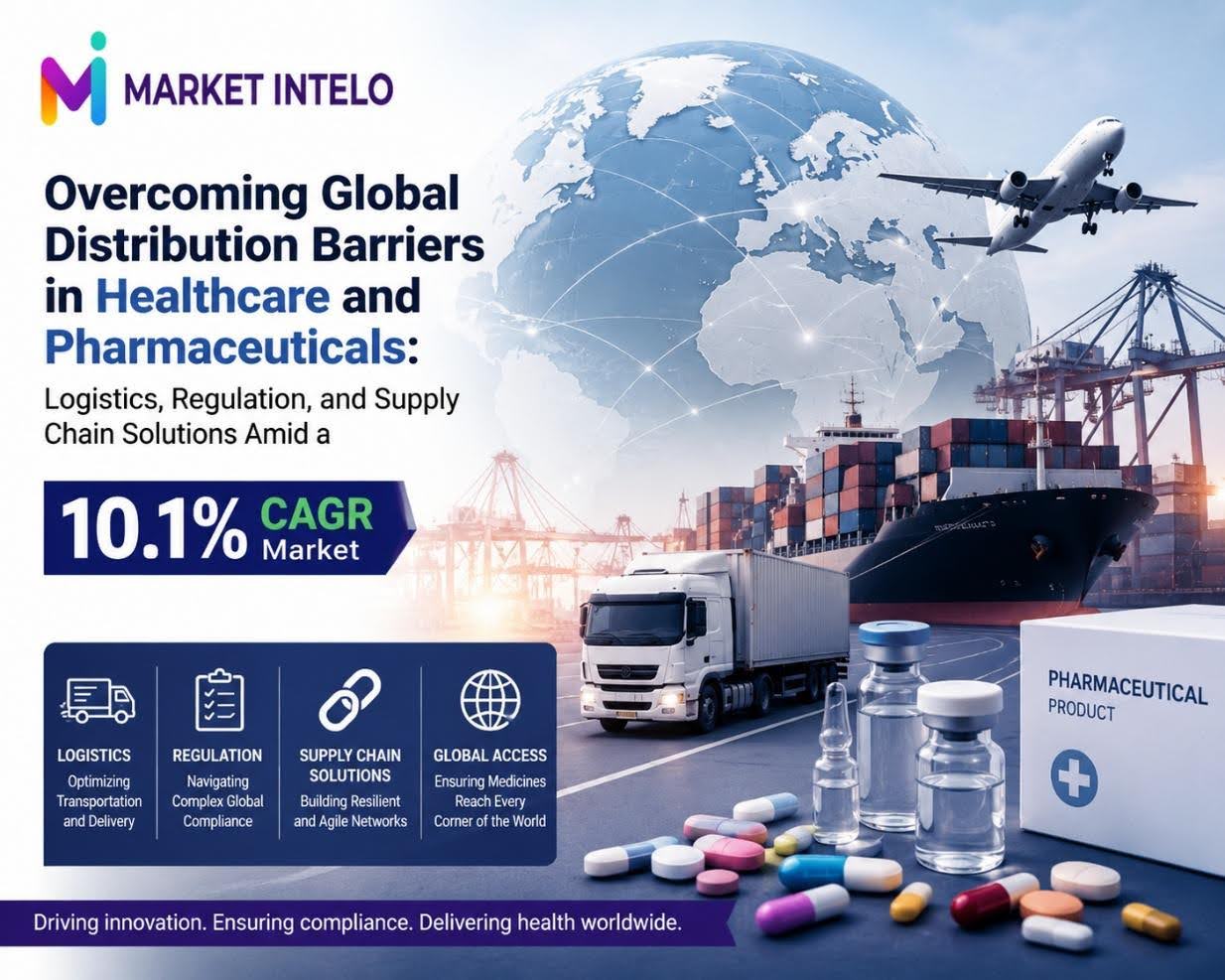
The availability of medicines and medical products depends not only on innovation but also on the efficiency of distribution systems. Across the world, healthcare systems continue to face significant challenges in ensuring that pharmaceutical products move from manufacturers to patients in a timely, safe, and efficient manner.
These challenges often result in delays, shortages, product wastage, and limited access to essential medicines. The issue becomes even more critical for vaccines, biologics, and other temperature-sensitive products that require specialized handling throughout the supply chain.
Regulatory Differences Create Delays
One of the biggest barriers to global pharmaceutical distribution is the variation in regulatory requirements from one country to another. Import procedures, product approvals, labeling standards, documentation, and customs requirements often differ significantly across jurisdictions.
These inconsistencies slow the movement of medicines across borders, increase compliance costs, and prolong delivery timelines. For patients requiring urgent treatment, such delays can have serious health consequences.
Healthcare Supply Chain Logistics and Visibility
According to Market Intelo, healthcare supply chain logistics plays a critical role in ensuring that medicines reach patients efficiently by connecting manufacturers, distributors, healthcare providers, and pharmacies.
Poor supply chain visibility means distributors often lack real-time information about product locations, inventory levels, emerging shortages, or transportation disruptions. This limits their ability to respond proactively to changing market conditions.
Digital technologies such as real-time tracking systems, inventory management software, and demand forecasting tools help overcome these challenges. These technologies provide distributors with accurate information about product movement, stock availability, and future demand, allowing them to optimize distribution and reduce delays.
Digital solutions also minimize human error while improving planning capabilities. Predictive analytics enables companies to identify potential shortages before they occur and adjust shipments accordingly. This is particularly important for high-demand medicines and products requiring strict temperature control.
According to Market Intelo, the global healthcare supply chain logistics market is expected to grow significantly, reaching approximately US$180.8 billion by 2034, up from an estimated US$96.4 billion in 2025, representing a compound annual growth rate (CAGR) of 7.8 percent between 2026 and 2034.
Infrastructure Remains Uneven
Another major obstacle is inadequate transportation and storage infrastructure. In many countries, poor road networks, insufficient warehousing facilities, and weak delivery systems reduce the efficiency of pharmaceutical distribution.

These challenges are particularly severe in rural and remote areas where healthcare facilities and pharmacies are limited. Inadequate transport and storage conditions increase the risk of medicine spoilage, delayed deliveries, and interrupted treatment.
Cold Chain Systems Are Essential
Many modern medicines, vaccines, and biological products must be stored and transported within strict temperature ranges. Failure to maintain these conditions can reduce their effectiveness or render them unusable.
Cold chain logistics has therefore become an indispensable component of pharmaceutical distribution. Refrigerated vehicles, temperature-controlled warehouses, monitoring devices, and continuous tracking systems help ensure that medicines maintain their quality and safety throughout the supply chain.
Counterfeit Medicines Remain a Concern
Counterfeit medicines continue to pose a significant threat to global healthcare systems. Weak monitoring and inadequate product traceability create opportunities for counterfeit drugs to infiltrate legitimate supply chains.
These fake medicines endanger patient safety, undermine confidence in healthcare systems, and result in significant economic losses.
To reduce these risks, many pharmaceutical manufacturers have adopted serialization and digital tracking technologies that assign unique identification codes to each product, making it easier to authenticate medicines throughout the supply chain.
Cooperation Can Improve Access
Governments, healthcare agencies, manufacturers, and logistics companies all have an important role to play in strengthening pharmaceutical distribution.
Simplifying customs procedures, harmonizing regulatory standards, and improving cross-border coordination can significantly reduce delays. Regional cooperation can further eliminate duplicated processes and improve efficiency across neighboring markets.
Public-private partnerships also provide valuable opportunities to strengthen logistics networks by combining public oversight with private sector innovation, technical expertise, and operational efficiency.
Local Distribution Systems Matter
Strong local distribution networks are just as important as international transport systems.
Countries that invest in modern storage facilities, skilled personnel, reliable transport infrastructure, and digital technologies are better positioned to respond to supply chain disruptions.

Local distributors often possess valuable knowledge of regional market conditions, transportation challenges, seasonal disruptions, and community healthcare needs, allowing them to respond more effectively than distant suppliers.
Financing Remains a Major Hurdle
Building efficient distribution systems requires substantial investment. However, many pharmaceutical distributors and logistics providers, particularly smaller firms, lack sufficient financial resources to expand their fleets, modernize storage facilities, or adopt advanced digital technologies.
Development finance, working capital facilities, concessional lending, and bulk purchasing arrangements can help bridge these financial gaps. Such mechanisms enable organizations to improve distribution capacity without bearing the entire investment burden alone.
Policy Coordination Can Reduce Delays
Governments and regulatory authorities play a vital role in improving pharmaceutical distribution by streamlining customs procedures, harmonizing documentation requirements, and adopting common regulatory standards.
Regional cooperation between countries with similar healthcare priorities and established trade routes can further accelerate the movement of medicines while reducing administrative bottlenecks.
Greater policy coordination ultimately strengthens supply chain resilience and ensures patients receive medicines more quickly.
Public-Private Partnerships Strengthen Distribution Networks
Partnerships between governments and private logistics companies offer an effective way of building stronger pharmaceutical supply chains.
Private logistics providers contribute operational efficiency, advanced technology, specialized expertise, and flexible distribution systems, while governments provide regulatory oversight and public health coordination.
Together, these partnerships can create secure, resilient, and efficient supply chains capable of responding to both routine healthcare needs and future public health emergencies.
A More Reliable Future
The future of healthcare distribution will depend on stronger coordination, improved infrastructure, greater supply chain transparency, and continued investment in digital technologies.
No single solution fits every country. However, through collaboration among manufacturers, regulators, logistics providers, healthcare institutions, and governments, more resilient pharmaceutical distribution systems can be built.
Ultimately, innovation alone is not enough. In healthcare, delivery is just as important as discovery. Medicines only achieve their purpose when they reach the patients who need them, safely, efficiently, and on time.
If you would like your article/opinion to be published on Uganda’s most authoritative news platform, send your submission on: [email protected]. You can also follow DailyExpress on WhatsApp and on Twitter (X) for realtime updates.