
Luwero, Uganda: Every day, hundreds of vehicles, buses, trucks and motorcycles travel along the Kampala–Gulu Highway, one of Uganda’s busiest transport corridors linking the capital to Northern Uganda and neighbouring South Sudan. Yet for many families, the highway has also become synonymous with tragedy.
Road traffic crashes continue to claim thousands of lives across Uganda each year, with many victims dying not because their injuries are unsurvivable, but because lifesaving assistance arrives too late.
According to the Uganda Police Force’s 2025 Annual Crime Report, the country recorded 26,044 road crashes, including 4,602 fatal crashes, resulting in 5,383 deaths, an average of about 15 people losing their lives every day on Ugandan roads. Thousands more suffered life-changing injuries.
The Kampala–Gulu Highway, stretching approximately 330 kilometres, has long ranked among Uganda’s most accident-prone roads because of its heavy traffic, long-distance cargo transport and high-speed travel.
Recognising that the first few minutes after a crash often determine whether a victim survives, the Legacy Road Safety Initiative (LRSI), in partnership with the Uganda Red Cross Society and with support from the Makerere University Research and Innovation Fund (Mak-RIF), has launched an innovative Community-Based First Responders (CBFRs) programme aimed at putting lifesaving skills directly into the hands of ordinary citizens.
Communities Becoming the First Line of Rescue
The programme is built on a simple but powerful reality: community members are usually the first to reach crash scenes, often long before ambulances, police or medical personnel. Instead of standing by helplessly, they can now provide immediate emergency care that may mean the difference between life and death.
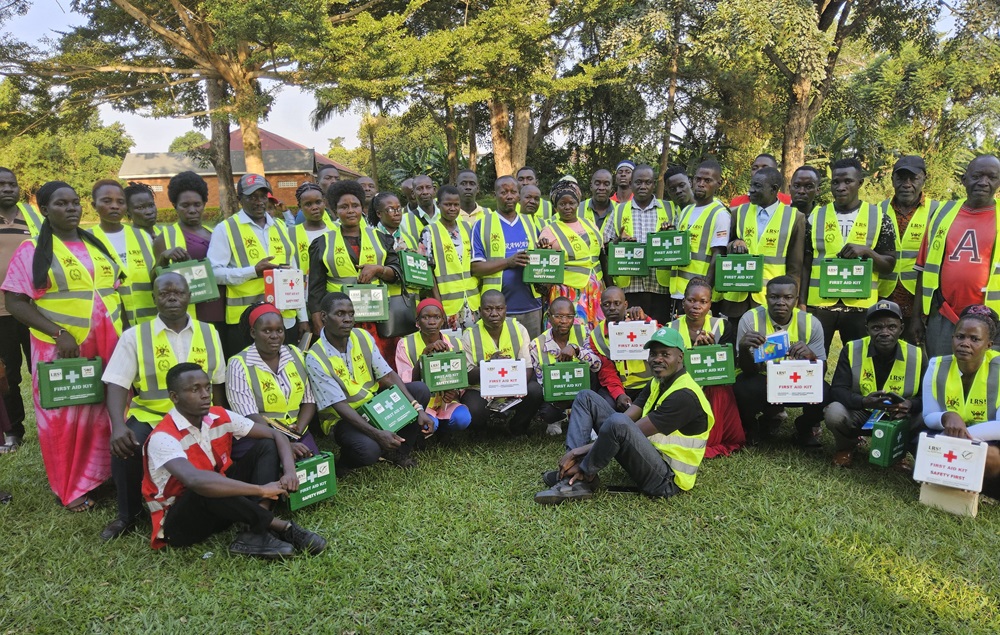
Between June 22 and 23, 2026, the initiative trained 114 of the targeted 120 Community-Based First Responders at Luwero Guest House.
The volunteers were drawn from communities located along the Kampala–Gulu Highway and included motorcycle riders (boda boda operators), commercial drivers, traders, Village Health Teams (VHTs), youth representatives, local council leaders and other community volunteers.
The diverse composition of the trainees reflects the programme’s goal of ensuring that almost every community has individuals capable of responding immediately whenever a road crash occurs.
Practical Skills That Save Lives
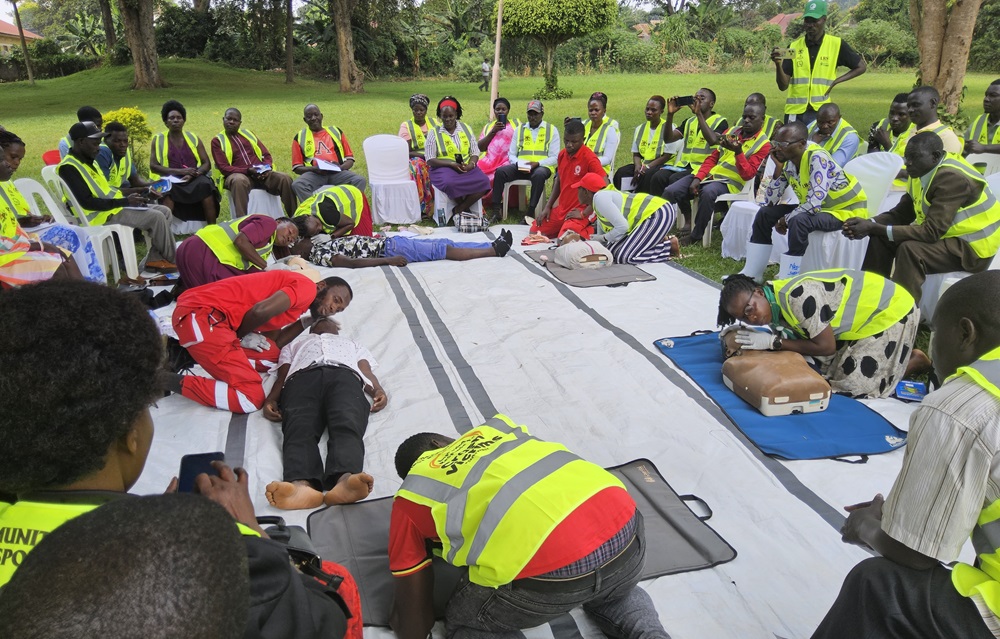
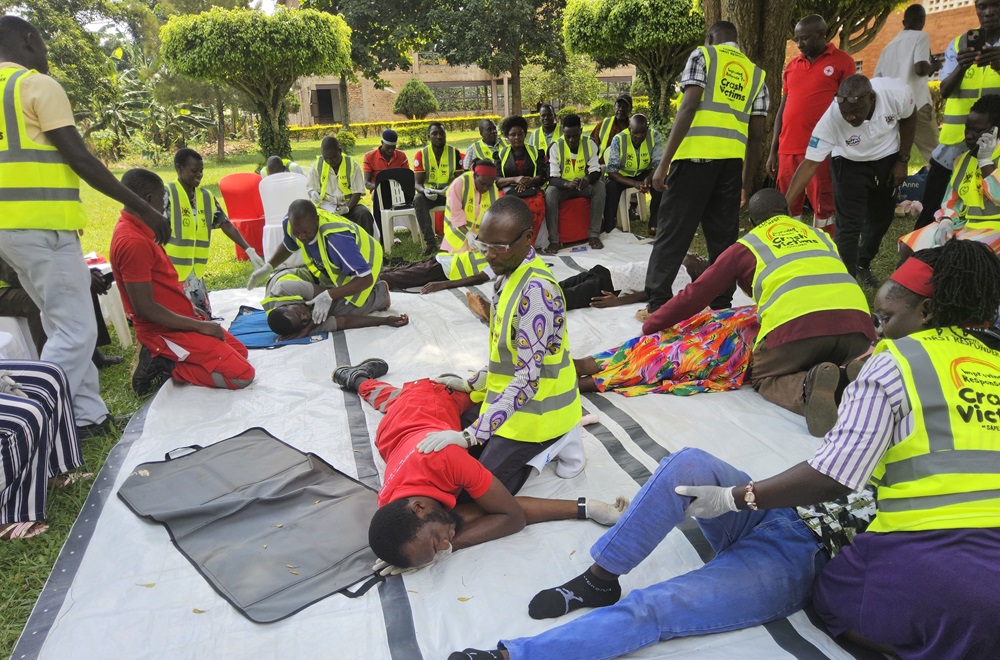
Unlike conventional classroom sessions, the training focused heavily on practical emergency response.

Participants were equipped with skills in principles of first aid, personal safety and scene assessment, emergency communication, bleeding control, fracture management and immobilisation, head injury management, safe handling of crash victims, patient transportation, recovery position for unconscious casualties, psychological first aid, rescue of trapped victims, and coordination with ambulances, police, and health facilities.
Each volunteer also received a reflector jacket, a fully equipped first aid kit, identification tags, emergency hotline cards and water bottles during the pass-out ceremony.
Training sessions were divided into three key components: introductory and closing sessions that included pre- and post-training assessments, theoretical instruction on community emergency response, and extensive hands-on practical demonstrations.
Learning That Changes Lives
For many participants, the training challenged long-held misconceptions about responding to road crashes.
“I have learned how to ensure my own safety and secure the scene before helping a victim, which I didn’t know before. I also learned to work with passion and reassure the victim at all times,” said participant Benard Sebandeke.
Another trainee, Ivan Sekabuzza, said the practical sessions fundamentally changed his understanding of emergency rescue. “I have learned how to open an airway and safely transport a victim to the ambulance. I have also learned how to properly remove a helmet from a crash victim,” he explained.
The practical nature of the programme ensured that participants could immediately apply their newly acquired skills within their communities.
Technology Supporting Community Rescue
The initiative goes beyond training by integrating technology into emergency response. A specially developed Graphical User Interface (GUI) supports the system by coordinating responders through instant SMS notifications and emergency alerts.
When a bystander witnesses a crash, they place a call to a designated emergency hotline.
The system automatically alerts nearby trained first responders, enabling them to reach the scene much faster while ambulances and formal emergency services are mobilised.
This community-based notification system significantly reduces response times, particularly in rural areas where emergency medical services may take longer to arrive.

Filling Uganda’s Emergency Response Gap
Emergency medicine experts have consistently emphasised the importance of the “golden hour”, the critical first hour after traumatic injury during which prompt medical intervention dramatically improves survival.
Unfortunately, many Ugandan communities remain far from fully equipped ambulance services.
The LRSI-Uganda Red Cross partnership seeks to bridge this gap by creating a sustainable community emergency response network capable of providing immediate lifesaving assistance before professional responders arrive.
Beyond crash response, the programme is also promoting greater road safety awareness, encouraging communities to become active participants in preventing accidents and supporting safer road use.
Building Safer Communities
The Community-Based First Responders initiative demonstrates that effective emergency response is not solely the responsibility of hospitals, police or ambulance services.
With proper training, equipment and coordination, ordinary citizens can become an indispensable component of Uganda’s emergency response system.
As road crashes continue to increase nationally, community-driven interventions such as this provide a practical, affordable and sustainable approach to reducing preventable deaths and disabilities.
The programme also strengthens collaboration between communities, police, health facilities, ambulance providers and humanitarian organisations, creating a more integrated post-crash response network.
For the Legacy Road Safety Initiative and the Uganda Red Cross Society, the objective extends beyond responding to emergencies. It is about creating resilient communities capable of protecting one another whenever tragedy strikes.
As Uganda continues searching for solutions to its growing road safety challenge, initiatives that empower citizens to act during those critical first moments after a crash may prove among the country’s most effective investments.
Because sometimes, the difference between life and death is not the hospital. It is the neighbour who knows what to do before the ambulance arrives.
“Saving lives begins with empowering communities to act when every second counts.”
If you would like your article/opinion to be published on Uganda’s most authoritative news platform, send your submission on: [email protected]. You can also follow DailyExpress on WhatsApp and on Twitter (X) for realtime updates.