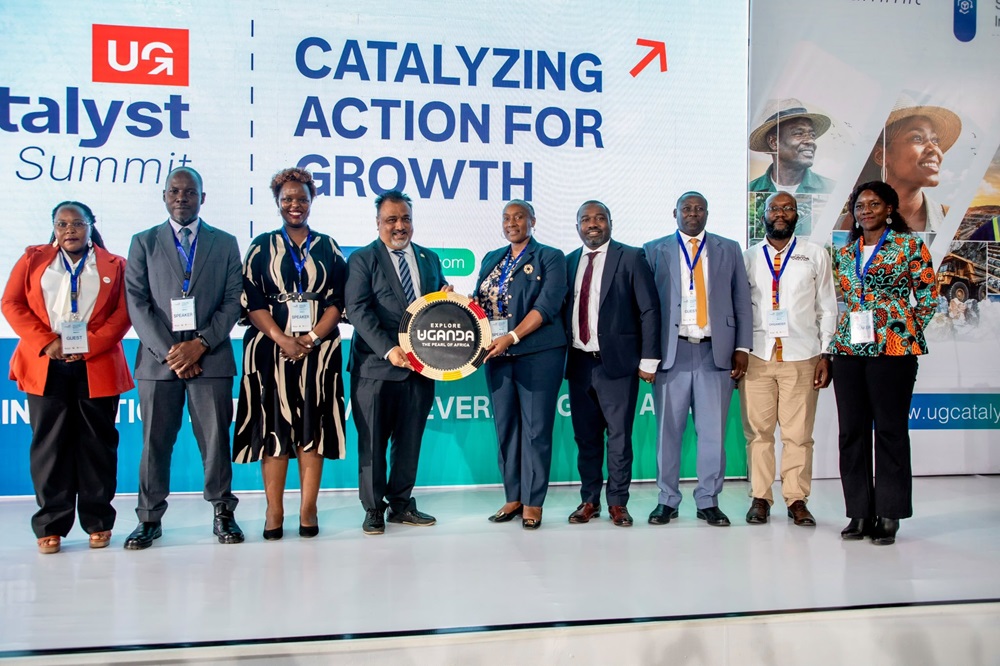
Kampala, Uganda: Uganda’s tourism industry could emerge as one of the biggest beneficiaries of the country’s renewed economic transformation agenda following high-level discussions at the UG Catalyst Summit 2026, where policymakers, private sector leaders and development partners outlined strategies to unlock new investment, strengthen entrepreneurship and position tourism as a major driver of inclusive growth.
Held at MoTIV Bugolobi, the summit brought together leaders from government, business, academia and civil society to explore practical solutions for accelerating Uganda’s tenfold economic growth ambition under the Fourth National Development Plan (NDP IV).
Speaking at the summit, National Planning Authority (NPA) Chairperson Prof. Pamela Mbabazi challenged leaders to focus on delivering tangible economic outcomes rather than rhetoric.
“Every generation receives a defining assignment. Our generation has been assigned the responsibility of economic transformation. History will judge us not by the speeches we gave, but by the opportunities we created,” Prof. Mbabazi said.
Her remarks resonated strongly throughout the tourism and creative industries discussions, where participants identified the sector as one of Uganda’s most promising engines for employment, foreign exchange earnings and community development.
One of the summit’s strongest messages was that Uganda’s tourism potential can only be fully realised through strategic investment in infrastructure and demand creation.

Delegates acknowledged that while Uganda possesses globally competitive attractions ranging from mountain gorillas and national parks to rich cultural heritage and adventure tourism, infrastructure gaps continue to limit the country’s ability to convert visitor arrivals into higher tourism revenues.
Discussions therefore shifted beyond destination marketing to long-term strategies that encourage repeat visitation, longer tourist stays and increased local spending across accommodation, transport, entertainment and cultural experiences.
The conversation comes as Uganda expands its international tourism marketing efforts, including recent destination branding campaigns across European cities such as Paris, where Uganda-branded buses have been promoting the country’s wildlife, landscapes and tourism experiences.
Participants argued that sustained investment in tourism infrastructure, product development and visitor experiences will be essential if such international campaigns are to translate into measurable economic returns.
Tax Incentives Offer Fresh Opportunities
The summit also delivered encouraging news for tourism entrepreneurs and investors.
Minister of Trade, Industry and Cooperatives Sanjay Tanna announced that qualifying startups will benefit from a three-year income tax holiday, a move expected to stimulate investment across tourism, hospitality, travel, creative industries and other innovation-driven businesses.
Given tourism’s strong entrepreneurial ecosystem, spanning tour operators, hotels, eco-lodges, restaurants, transport providers, cultural enterprises and digital travel platforms, delegates said the tax incentive could unlock significant private sector investment while encouraging the development of new tourism products.
Government also unveiled the Opportunity Dashboard and confirmed that the proposed Startup Development Policy will soon be presented before Cabinet, signalling stronger institutional support for innovation and enterprise development.

The summit also provided an honest assessment of the challenges limiting Uganda’s competitiveness. Private sector participants argued that access to finance remains constrained partly because many businesses are not sufficiently investment-ready, noting that improving bankability requires stronger business governance, financial management and market preparedness.
Delegates further identified fragmentation among businesses as a major obstacle preventing Uganda from fully benefiting from opportunities under the African Continental Free Trade Area (AfCFTA).
For tourism micro, small and medium enterprises (MSMEs), including community tourism initiatives, cultural sites, craft producers and local tour operators, participants stressed that government policies must become more accessible and responsive to the realities facing small businesses.
Closing the gap between policy formulation and implementation, they argued, will be critical to ensuring that tourism businesses across the country participate meaningfully in Uganda’s economic transformation.
Tourism at the Centre of Uganda’s Growth Agenda
With tourism already ranking among Uganda’s leading foreign exchange earners, stakeholders agreed that the sector will play a central role in achieving government’s long-term economic aspirations.
Uganda’s biodiversity, cultural diversity, adventure tourism, conference tourism and growing creative economy provide the country with unique competitive advantages that few destinations can match.
However, delegates emphasised that realising this potential will require continued investment in transport infrastructure, destination management, skills development, financing mechanisms, digital innovation and policy consistency.
The overarching message from the UG Catalyst Summit 2026 was that Uganda is moving beyond discussions about potential and beginning to establish the systems, incentives and partnerships required to transform tourism into one of the country’s strongest engines of sustainable economic growth.
If you would like your article/opinion to be published on Uganda’s most authoritative news platform, send your submission on: [email protected]. You can also follow DailyExpress on WhatsApp and on Twitter (X) for realtime updates.