
Seoul, South Korea: The detention and prosecution of 95-year-old religious leader Lee Man-hee, founder and chairman of the Shincheonji Church of Jesus, has attracted growing international attention, with religious freedom advocates and human rights commentators questioning South Korea’s handling of the case and warning of possible implications for judicial independence and religious liberty.
Lee was taken into custody on June 24 before being formally indicted on June 30 over alleged violations of South Korea’s Political Parties Act. Prosecutors allege that between July 2021 and January 2024, he organised the enrolment of approximately 50,000 members of the Shincheonji Church into the ruling People Power Party (PPP) in an effort to influence internal party elections.
The case has become the subject of international debate after South Korea’s Justice Minister, Jeong Seong-ho, publicly stated on social media that “strict criminal punishment corresponding to its responsibility is inevitable” on the day Lee was indicted, before concluding his message with a quotation from Matthew 7:15, “Beware of false prophets.”
Critics argue that such remarks, made while judicial proceedings are ongoing, risk undermining perceptions of judicial impartiality.
Among those raising concerns is Italian sociologist of religion Dr. Massimo Introvigne, who has published a series of commentaries examining the case. He argues that detaining a 95-year-old religious leader over allegations not involving violence raises questions under international human rights principles, including the United Nations Standard Minimum Rules for the Treatment of Prisoners (Mandela Rules) and the principles of the UN Working Group on Arbitrary Detention.
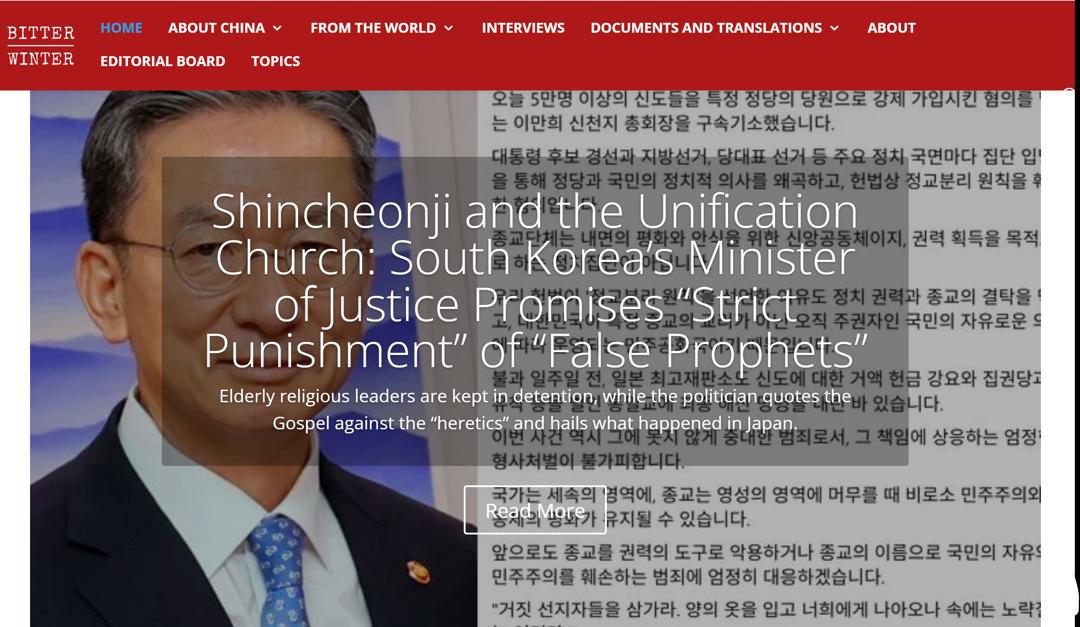
Introvigne further described the prosecution as “a stain on South Korea’s democratic credentials,” arguing that democratic governments should apply equal standards of justice and due process to religious minorities regardless of public perceptions about their beliefs.
The Shincheonji Church has rejected allegations that members were forced to join any political party.
In a statement issued after Lee’s detention, the church said its chairman had cooperated fully with investigators throughout the inquiry, including search operations and questioning, describing his continued detention as “in effect a physical punishment imposed on a 95-year-old suspect.”
According to the church, the central legal issue is not whether members joined a political party, but whether they were coerced into doing so, an allegation it firmly denies.

The case has also reignited broader discussions surrounding freedom of religion in South Korea, where several minority religious movements have previously complained of discrimination and hostile public treatment.
Observers note that the proceedings are likely to test the country’s commitment to balancing criminal investigations with constitutional guarantees of religious freedom, political participation and judicial independence.
Legal analysts say prosecutors will ultimately be required to demonstrate evidence of coercion rather than mere political participation by church members.
The trial is expected to attract continued attention from international religious freedom organisations, legal scholars and human rights groups as it progresses through South Korea’s courts.
If you would like your article/opinion to be published on Uganda’s most authoritative news platform, send your submission on: [email protected]. You can also follow DailyExpress on WhatsApp and on Twitter (X) for realtime updates.