
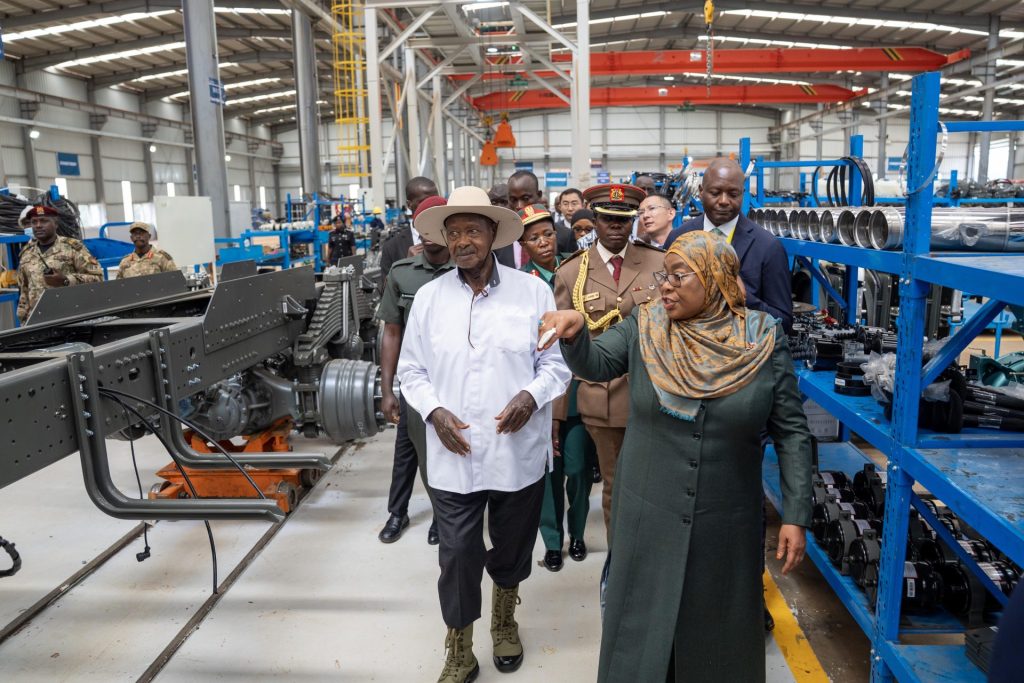
In Summary: With an annual assembly capacity of 4,000 trucks, more than 5,000 vehicles assembled through its Ugandan operations and over 1,200 direct employees, Double Q Automotive is positioning itself as part of Uganda’s growing industrial ambitions. Its plans to expand local sourcing, engineering, metal fabrication and skills development raise an important question about how much value the country can retain from vehicle production.
Mpigi, Uganda — Uganda’s ambition to become a manufacturing hub is increasingly being tested by investments seeking to move the country beyond importing finished products towards assembling vehicles, developing local components and building industrial skills.
One of the companies pursuing this transition is Double Q Automotive, whose operations in Nakirebe, Mpigi District, are centred on assembling heavy-duty trucks while exploring opportunities to expand local manufacturing and strengthen Uganda’s automotive value chain.
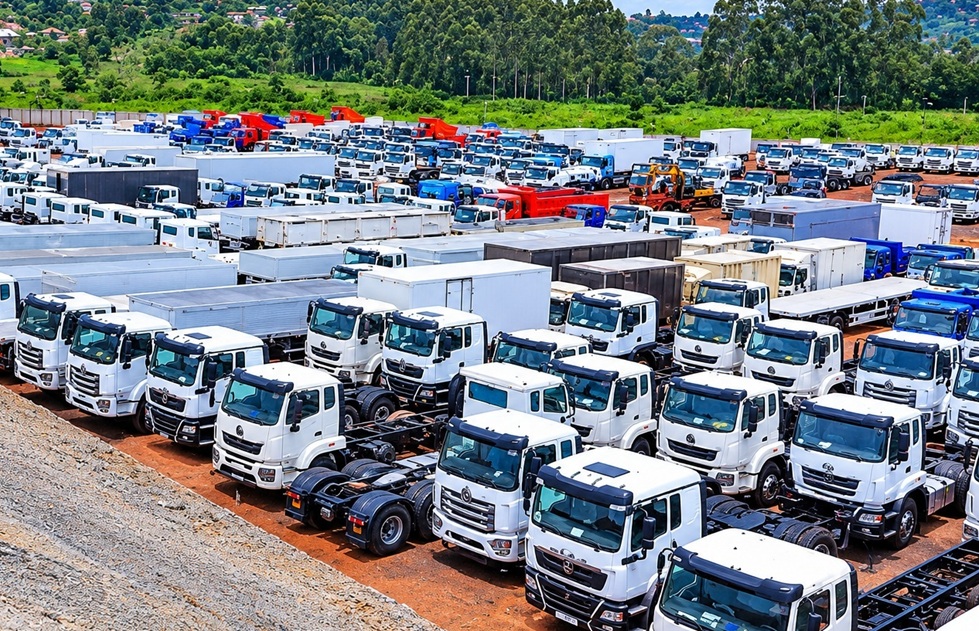
The company’s $30 million assembly plant, officially launched by President Yoweri Kaguta Museveni and Tanzania’s President Samia Suluhu Hassan on November 19, 2026, has an annual capacity of 4,000 trucks and assembles Sinotruk vehicles. It also represents the GMC and XCMG automotive brands in Uganda.
Beyond the investment itself, the facility highlights a wider industrial question: how can Uganda turn vehicle assembly into a broader manufacturing ecosystem that creates jobs, develops technical skills and increases the use of locally produced materials?
From vehicle distribution to local assembly
Double Q Automotive’s expansion into vehicle assembly has been gradual. According to the company’s Managing Director, Lin Yu, the business began operations in Uganda in 2013 as a transporter of construction materials before expanding into the automotive sector.
It initially ventured into the supply of Sinotruk spare parts, after-sales services and vehicle leasing before becoming an official Sinotruk distributor in Uganda in 2017.
In 2020, the company started assembling Sinotruk vehicles locally. Yu said more than 5,000 trucks had since been assembled through its Ugandan operations.
The new facility, established on 45 acres of land, provides an annual assembly capacity of 4,000 trucks, creating room for the company to expand production.
However, the company’s longer-term ambition is to move beyond assembling imported components and develop more activities locally, including engineering, metal fabrication, logistics and the production of vehicle parts.
“We want to buy more materials locally, make more truck parts in Uganda, and expand our work in metal fabrication, engineering, and logistics,” Yu said.
This ambition connects directly to the government’s broader push for value addition and the Buy Uganda, Build Uganda policy, which seeks to encourage the consumption and production of locally made goods.
The local value addition question
A key measure of the plant’s contribution to Uganda’s economy will be the extent to which its operations can draw on local suppliers and manufacturers.
At the launch, President Museveni urged the company to strengthen connections between vehicle assembly and Uganda’s steel industry, arguing that locally available raw materials should increasingly support domestic manufacturing.
He noted that the facility was already undertaking vehicle body-building operations, contributing approximately 20 per cent in local value addition.
Museveni said Uganda’s iron ore deposits offered an opportunity to develop a stronger domestic steel industry capable of supplying manufacturers with raw materials, reducing reliance on imported components and retaining more economic value within the country.
The President also pointed to the potential of combining Uganda’s resources with those of neighbouring countries to support industrial development.
“You find that Tanzania has got gas, Uganda has got iron ore, and other products. So, when you put them together, instead of using them in a fragmented way, you will do better business. You succeed more easily,” he said.
For Uganda’s automotive sector, stronger domestic steel production could create opportunities for local manufacturers to supply materials and components used in vehicle assembly.
However, achieving this will require investment in production technology, quality standards, engineering expertise and reliable supply chains.
The transition from assembling imported components to manufacturing a greater share of vehicle parts locally is therefore likely to depend on how effectively the company works with domestic industries and technical institutions.
More than 1,200 jobs and a skills development opportunity
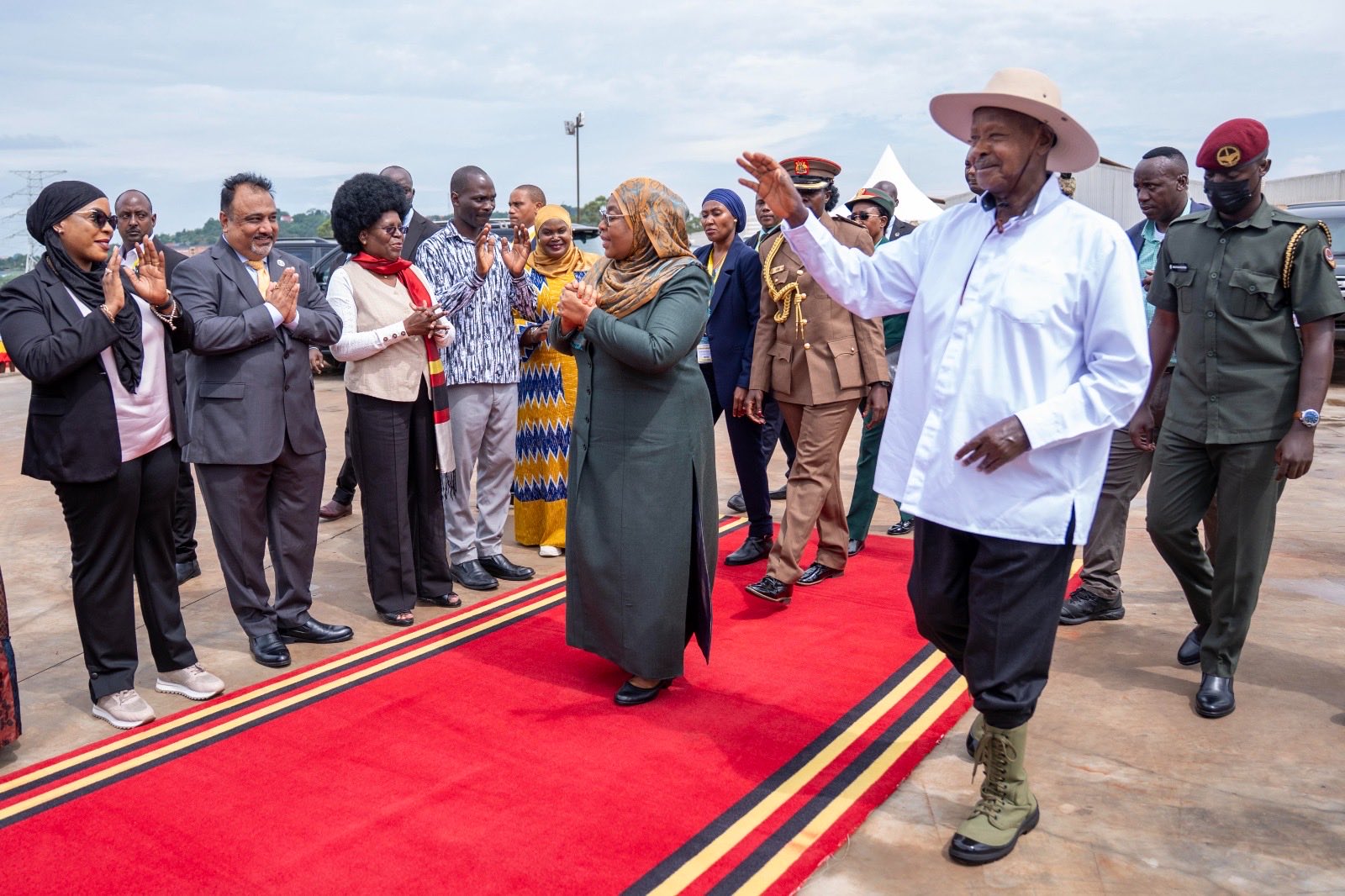
The plant’s contribution also extends to employment and workforce development. The Minister of Works and Transport, Hon Fred Byamukama, said Double Q Automotive directly employs more than 1,200 Ugandans, many of whom have acquired practical skills through government skilling programmes and on-the-job training.
He disclosed that the lowest-paid employee earns approximately Shs800,000 per month, commending the company for providing employment opportunities and contributing to the development of Uganda’s industrial workforce.
The company is also seeking to strengthen technical training through partnerships with Kyambogo University, Uganda Christian University and Nakawa Vocational Institute.
According to Yu, the partnerships are intended to bridge the gap between classroom learning and practical industrial skills by preparing Ugandan engineers, technicians and other professionals for the automotive sector.
Such collaboration could help address the demand for specialised skills in vehicle assembly, mechanical engineering, metal fabrication and maintenance.
For a country seeking to expand manufacturing, the ability to train and retain skilled workers will be as important as attracting investment in production facilities.
Regional markets could expand the opportunity
The investment also comes at a time when East African countries are seeking to strengthen regional manufacturing and trade.
President Suluhu used the launch to call for greater cooperation among East African Community member states, warning against unnecessary competition in establishing similar industries. She argued that countries should develop complementary industrial policies and build regional value chains that allow manufacturers to serve a larger market.
“East Africa must compete with the world, not within itself,” Suluhu said. She cited the presence of Sinotruk operations in both Uganda and Tanzania as an opportunity for cooperation rather than competition.

The Tanzanian President also welcomed proposals for harmonised regulations governing vehicle assembly and manufacturing across the region, saying a coordinated approach would create a stronger market for locally manufactured products.
Double Q Automotive currently operates in Kenya, Tanzania, Rwanda, South Sudan, the Democratic Republic of Congo and Zambia, giving it a presence in several markets within and beyond the East African region.
The company’s regional footprint could offer opportunities to expand distribution and after-sales services, although the extent to which the Ugandan facility will serve these markets remains to be established.
Suluhu also revealed that Tanzania was exploring partnerships to establish a railway locomotive manufacturing plant as part of its industrial expansion plans. She pointed to the Port of Dar es Salaam, which she said handled approximately 33 million tonnes of cargo in 2026, as an indication of growing regional transport and logistics demand.
Expansion plans and the road ahead
The government’s expectations for Double Q extend beyond truck assembly. Hon Byamukama disclosed that government was engaging the company on plans to expand its operations into manufacturing, including a proposed tyre production facility at Kayunga Industrial Park.
If realised, the project could broaden Uganda’s automotive manufacturing base and create opportunities for local production of components currently sourced from outside the country.
Yu also said Double Q intends to expand into passenger vehicles and electric trucks, signalling the company’s interest in diversifying its product range.
The Chinese Ambassador to Uganda, Wu Guangrong, welcomed the investment and encouraged Chinese companies operating in the country to comply with local laws, uphold workplace safety standards, protect the environment and invest in developing local talent.
He reaffirmed China’s commitment to strengthening industrial and skills development cooperation with Uganda.
Meanwhile, Sinotruk International General Manager Song Yang said the company’s products serve customers in more than 160 countries and regions, with overseas heavy-duty truck sales exceeding 1.2 million units.
He projected that Sinotruk would produce and sell more than 360,000 heavy-duty trucks globally in 2026, with approximately 110,000 destined for African markets.
Yang said the company’s success should not be measured only by sales volumes but also by the jobs created, skills transferred and value delivered to local economies.
Turning investment into a lasting industrial base
For Uganda, the significance of the Double Q investment will ultimately depend on what develops around the assembly line. A stronger automotive industry requires more than facilities capable of putting imported components together. It depends on local suppliers, competitive manufacturing costs, technical skills, reliable infrastructure, quality standards and access to regional markets.
The company’s stated plans to increase local sourcing, develop engineering and metal fabrication capacity, and work with Ugandan training institutions offer possible pathways towards that goal.
However, the extent of local sourcing, the number of components that can eventually be manufactured in Uganda and the implementation of proposed expansion projects will be important measures of progress.
The wider challenge is to ensure that industrial investments generate benefits beyond the companies operating them, creating opportunities for local manufacturers, workers, suppliers and technical institutions.
As Uganda pursues its industrialisation agenda, Double Q Automotive’s next phase will provide an opportunity to assess whether vehicle assembly can become a foundation for deeper domestic manufacturing and stronger regional production networks.
If you would like your article/opinion to be published on Uganda’s most authoritative news platform, send your submission on: [email protected]. You can also follow DailyExpress on WhatsApp and on Twitter (X) for realtime updates.