
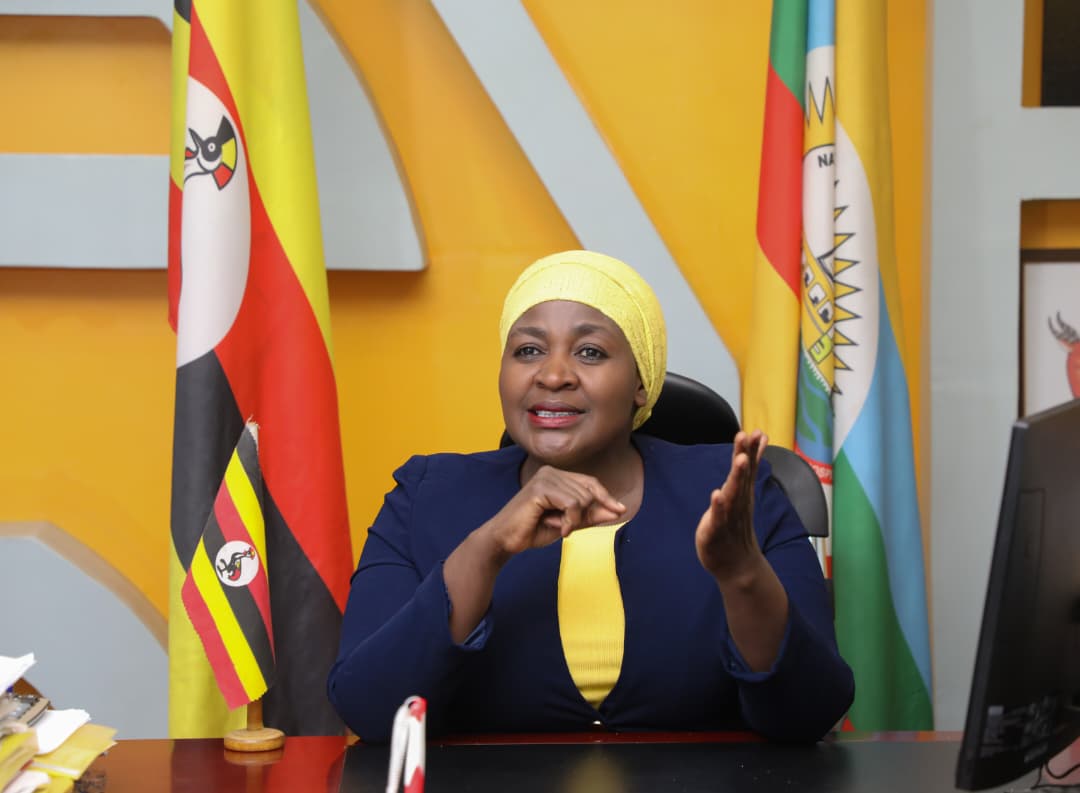
In Summary: Senior Presidential Advisor and Head of the Office of the National Chairman (ONC), Hajjat Hadijah Hadijah Namyalo Uzeiye, has called for a review of Uganda’s taxation and customs-clearance systems, siding with traders who staged a three-day shutdown over high import taxes, delayed clearance of goods and alleged irregularities in revenue enforcement. She wants government to replace the per-kilogram tax model on textiles and garments with one based on the actual value of goods, investigate complaints of extortion and ensure fair competition between local traders and foreign investors.
Kampala, Uganda —Thr Senior Presidential Advisor and Head of the Office of the National Chairman (ONC), Hajjat Hadijah Namyalo Uzeiye, has called for comprehensive tax reforms and improved customs administration, warning that the current business environment is placing growing pressure on Ugandan traders and undermining government efforts to promote wealth creation.
Addressing journalists at her offices in Kyambogo on Friday, November 20, 2026, Namyalo backed calls by traders for a fairer and more predictable tax system following a three-day closure of businesses in Kampala over taxation, customs-clearance delays and Uganda Revenue Authority (URA) enforcement practices.
Namyalo’s office said the concerns raised by traders, particularly small and medium-sized businesses, deserved serious attention because of the role such enterprises play in supporting households, paying school fees and providing employment.
She observed that the recent protests were not only about the amount of tax charged but also the procedures traders encounter when importing, clearing and transporting merchandise.
“A trader can plan for a tax rate, even a high one. What no business can plan for is a process in which the cost of getting goods to the shelf changes with every checkpoint, every officer and every day of delay,” Namyalo said.
She added: “Predictability is what traders are asking for, and it is a reasonable thing to ask of any government.”
The three-day shutdown, which began on November 17, followed growing complaints by traders over taxes on imported textiles and garments, the impounding of merchandise, customs-clearance delays and the implementation of the Electronic Fiscal Receipting and Invoicing Solution (EFRIS).
On Thursday, the traders agreed to reopen their businesses following engagements with Prime Minister Robinah Nabbanja, during which government committed to reviewing taxes on imported textiles and garments, expediting the release of goods belonging to compliant traders within three days and improving coordination among enforcement teams.
Government is expected to present a more comprehensive position after further consideration of the grievances, with the tax review also expected to examine alignment with other East African Community partner states.
Per-kilogram tax model under scrutiny
A major concern raised by Namyalo’s office is the taxation of imported fabrics and garments based on weight rather than the actual value of the merchandise.
Under the financial year 2025/2026 measures, effective July 1, 2025, imported fabrics attract import duty of USD 2 per kilogramme or 35 per cent of customs value, whichever is higher. Imported garments attract USD 2.50 per kilogramme or 35 per cent of customs value, whichever is higher.
In her ONC statement, Namyalo noted that import duty is only part of the total cost, with 18 per cent Value Added Tax (VAT), infrastructure-related levies and, in some cases, environmental levies also applying.
She argued that charging by weight can disproportionately affect heavy garments such as jeans, increasing the tax burden on traders dealing in such merchandise.
The ONC boss cited complaints from traders who reportedly had similar 40-foot containers of garments assessed at different values, with one attracting a bill of approximately Shs500 million and another Shs600 million.
“When like loads receive such different bills, traders are right to ask how customs values are set and whether the rules are applied consistently,” her statement reads.
Namyalo’s office called on the Ministry of Finance and URA to adopt a taxation framework that is predictable, transparent and competitive, without suffocating legitimate businesses.
The ONC is proposing that government replace the per-kilogramme model for textiles and garments with one based on the actual value of goods, while comparing Uganda’s tax regime with those of Kenya and Tanzania to maintain the country’s competitiveness as a regional trading hub.
Traders raise concerns over clearance, alleged extortion
Beyond the tax rates, Namyalo’s statement highlighted complaints about the handling of merchandise after traders have completed customs-clearance requirements.
According to the ONC boss, traders allege that even after paying the required URA charges, their goods are sometimes delayed until officials are given what they describe as “kitu kidogo”.
She further cited complaints of consignments being stopped by army personnel on allegations of under-clearance despite traders holding release orders, with some reportedly being asked to pay additional money or meet warehousing costs.
Namyalo also referred to allegations that merchandise is picked from shops during offloading and that traders are subsequently subjected to additional charges. “These are serious allegations, and they call for prompt investigation and a clearance system that traders can trust,” she noted.
The ONC also questioned the practice of transferring merchandise imported from Kenya, Tanzania and Sudan to the URA warehouse in Nakawa after it has already been cleared at the border.
Hajjat strongly called for investigations into alleged informal payments, interceptions after release orders and double charging, alongside a review of procedures that require goods cleared in neighbouring countries to be taken to Nakawa.

Local traders seek protection from unfair competition
Namyalo’s office also raised concerns regarding competition between small Ugandan-owned businesses and larger foreign investors operating in the country’s wholesale and retail sectors.
It noted that local traders often establish businesses using personal savings and bank loans, while meeting rental costs, paying workers and fulfilling tax obligations.
However, the ONC argued that some foreign investors who initially enter the market through manufacturing, large-scale investment and distribution later expand into wholesale, retail shops and direct sales to consumers, placing them in direct competition with smaller domestic businesses.
“We do not ask for foreign investors to be driven out; Uganda welcomes investment that creates jobs, passes on skills and grows the economy,” the statement said, adding that every investor should comply with the Trade (Licensing) Act and the Investment Code, arguing that large-scale foreign investment should not be allowed to push out small Ugandan businesses.
The ONC called on government to draw clearer distinctions between large-scale investment, wholesale operations and small-scale retail, while ensuring that existing laws are enforced fairly.
ONC wants stronger engagement between URA and traders
Hajjat also called for a more structured working relationship between URA and the trading community, arguing that regular consultation could help address disputes before they escalate into business closures.
Among the proposed measures she raised include regular engagements between URA and traders, tax education, clear customs valuation guidelines, an effective complaints-handling mechanism and practical support for businesses implementing EFRIS.
She also called for wider access to affordable credit to help small businesses manage their operations and meet tax obligations.
Government intervention and next steps
Hajjat Namyalo welcomed the intervention by President Yoweri Kaguta Museveni and the engagements led by Prime Minister Robinah Nabbanja following the traders’ protests.She specifically welcomed the inter-agency review of textile and garment taxation and the directive to expedite the clearance of goods belonging to compliant traders.
The office called on the Ministries of Finance and Trade, URA, Uganda Investment Authority and Parliament to work together to address the concerns and ensure that the proposed reforms translate into lasting policy changes.
The ONC also urged traders to continue raising their concerns through recognised associations while meeting their lawful tax obligations. “The traders of Uganda are not asking for favours. They are asking for fair rules, applied fairly, so that those who work hard, pay what they owe and follow the law can build something for their families,” the statement reads.
The SPA concluded that revenue mobilisation should go hand in hand with wealth creation, warning against taxation and enforcement practices that could undermine the participation of Ugandans in the economy.
“Our position is clear. We support revenue mobilisation, but not at the expense of wealth creation. We welcome foreign investment, but not unfair competition. We want a strong economy in which Ugandans have a fair chance to take part and prosper,” she noted.
If you would like your article/opinion to be published on Uganda’s most authoritative news platform, send your submission on: [email protected]. You can also follow DailyExpress on WhatsApp and on Twitter (X) for realtime updates.