
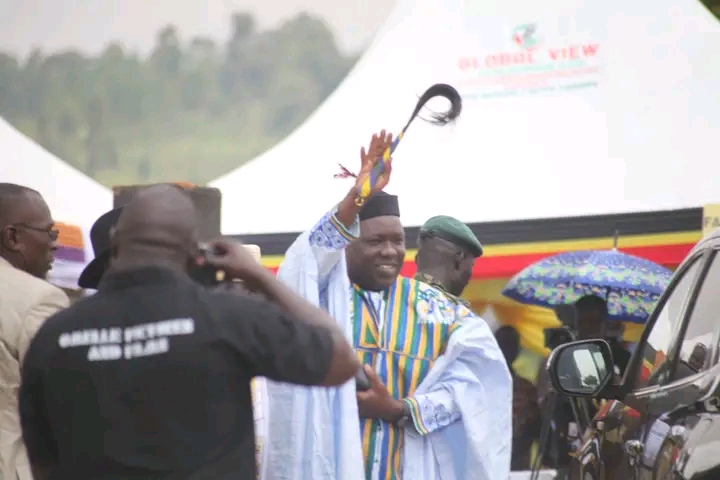
Pakwach, Uganda: The Alur Kingdom has launched an ambitious documentation project aimed at preserving its rich cultural heritage, including artefacts, traditional norms, and indigenous knowledge systems in science and technology.
The initiative seeks to protect centuries-old cultural treasures that have remained largely undocumented and are increasingly at risk of deterioration.
Across the kingdom’s 56 chiefdoms in Uganda and eight in the Democratic Republic of Congo, many cultural items, ranging from ancient tools, pottery, regalia, and ornaments to sacred objects and historical sites, have suffered damage due to poor storage and conservation practices.
Prince Lawrence Opar Angala, the Kingdom’s Prime Minister (Jadipu), described the initiative as both timely and critical.
“We have now begun the systematic documentation of all aspects of our cultural artefacts, norms, and indigenous knowledge… to preserve and promote our heritage,” he said.

A five-member committee of experienced elders has been constituted under the Ministry of Culture to spearhead the exercise, with a focus on identifying, restoring, and reviving thousands of endangered cultural items.
The initiative aligns with the mandate of the Uganda National Council for Science and Technology, particularly in promoting indigenous science and technology.
It also reflects broader national priorities under Uganda’s National Cultural Policy Framework 2024 and the Third National Development Plan (NDPIII), which emphasize heritage preservation, museum development, and community-led conservation.
The Kingdom recently joined other West Nile cultural institutions, including Luguara Kari, Aringa, Madi, and Ndrukpa (Lendu), in a high-level consultative meeting with UNCST officials in Arua City, focusing on strengthening documentation of cultural artefacts across the sub-region.
Uganda currently has over 600 designated cultural heritage sites, with at least 56 requiring urgent conservation, according to the Ministry of Tourism, Wildlife and Antiquities.
The documentation drive also supports ongoing national efforts to establish a Centre of Excellence for Indigenous Knowledge and Technologies by UNCST.

Indigenous knowledge systems, developed and passed down through generations, play a crucial role in areas such as agriculture, healthcare, environmental conservation, and sustainable resource management.
The project forms part of a wider national survey aimed at assessing the relevance, gaps, and opportunities for integrating indigenous technologies into Uganda’s development agenda.
However, experts warn that these systems face growing threats, including inadequate documentation, weak policy support, and rapid cultural changes driven by modernization.
Cultural artefacts remain vital as tangible links to history, offering insights into craftsmanship, daily life, and belief systems of past generations.
They also serve as powerful tools for education, identity, and community pride, bridging the gap between the past and present.
The Kingdom, under the leadership of His Majesty Ubimu Phillip Rauni III, says the initiative will help reclaim, accurately document, and celebrate Alur heritage for generations to come.
If you would like your article/opinion to be published on Uganda’s most authoritative news platform, send your submission on: [email protected]. You can also follow DailyExpress on WhatsApp and on Twitter (X) for realtime updates.