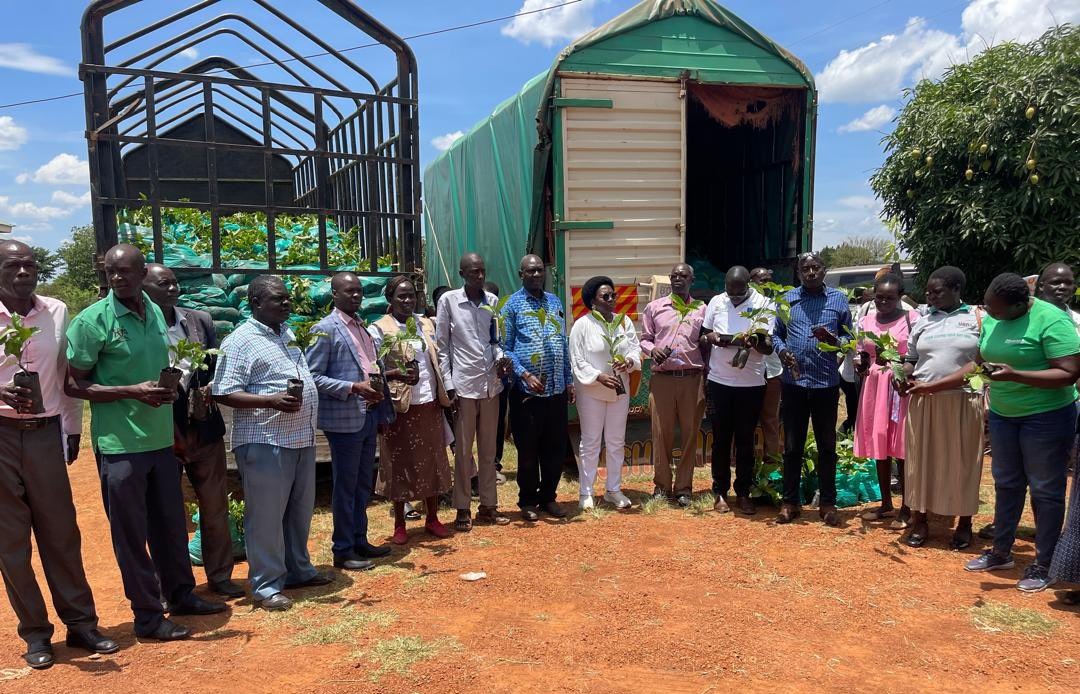
Lango, Uganda: The Lango Cultural Institution has launched a major agricultural transformation drive, distributing 150,000 coffee wilt disease-resistant seedlings to farmers across the sub-region in a bid to transition households from subsistence farming to the money economy.
The seedlings, valued at Shs300 million, will benefit approximately 1,000 farmers and are being distributed at the Lango Cultural Centre under the leadership of Paramount Chief Moses Michael Odongo Okune.
“This is a defining moment for our people,” said Counsel Patrick Okwir, the institution’s spokesperson. “For years, our farmers have depended on subsistence agriculture. This intervention is about turning them into income earners through high-value crops like coffee.”
The initiative follows a formal request submitted on March 9, 2026, by the Won Nyaci Me Lango Office of the Prime Minister to the Ministry of Agriculture, Animal Industry and Fisheries (MAAIF), seeking over 390,000 seedlings for the 2026 planting season.

Prime Minister Willy Okullo said farmers had already been mobilised and prepared. “We submitted all the required documentation and demonstrated that our farmers are ready. Our belief is that commercial coffee farming will lift many households out of poverty,” he noted.
In response, MAAIF, through Permanent Secretary Maj. Gen. David Kasura-Kyomukama approved 150,000 clonal seedlings, with district agricultural officers tasked to provide technical support.
Okwir urged clan leaders to ensure equitable allocation of the seedlings based on farmers’ land capacity. “Those who may miss out in this phase should not lose hope. More support will follow,” he said.
The institution’s Agriculture Minister, Michael Abeja, acknowledged that demand exceeded supply but assured strict monitoring. “We will ensure every seedling distributed is planted and properly managed,” Abeja said.
Untapped Potential in Lango
Leaders say the programme is long overdue in a region with strong agricultural potential but limited investment in high-value crops.

“Because of past insurgencies, many households resorted to low-return crops like maize and soya beans. Coffee offers a real opportunity to change that narrative,” Abeja added.
Deputy Agriculture Minister Josephine Omara Olili dismissed long-held perceptions that coffee cannot thrive in Northern Uganda. “Our soils and climate are suitable. This programme proves that Lango can compete,” she said.
The initiative aligns with government’s broader strategy to increase national coffee production to 20 million 60-kilogramme bags annually by 2030, positioning coffee as a key driver of export earnings and rural income.
Regional Agricultural Officer Andrew Okello Awany said farmer training and sensitisation have already been conducted across districts. “The involvement of cultural leaders has strengthened mobilisation and trust within communities,” Awany noted.
With distribution now underway, leaders believe the programme will do more than boost coffee production, it will transform livelihoods and integrate thousands of households into Uganda’s money economy.
If you would like your article/opinion to be published on Uganda’s most authoritative news platform, send your submission on: [email protected]. You can also follow DailyExpress on WhatsApp and on Twitter (X) for realtime updates.