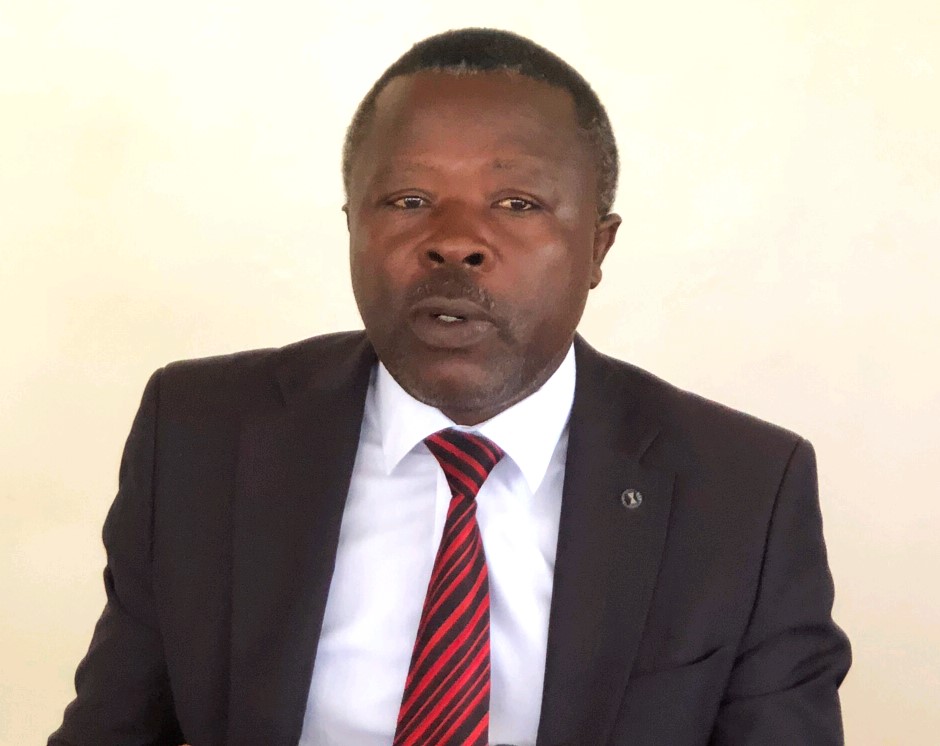
By Steven Masiga
Bugisu region is one of the tribes in Uganda with a gazetted cultural leader, alongside others like Buganda, Busoga, Bunyoro, Acholi, Lango, Budama, Kasese, among others. Some of the traditional and cultural institutions had existed before the enactment of the 1995 Constitution, like Bugisu, Buganda, Budama, Bunyoro, Busoga, Sebei, among others, but were abolished by government in 1967 when government lost appetite for both cultural and traditional institutions premised on their evaluation. Government at that time deconstitutionalized and outlawed their existence, and some cultural and traditional leaders were arrested while others fled to exile. In the absence of legal existence, any continued existence was deemed illegal and thus ultra vires.
During the NRA military rebellion, discussions were made with several communities in regard to restoration of cultural and traditional leaders back to life. Informal agreements were made with some communities to support the rebellion in an attempt to achieve restoration of cultural and traditional institutions. At some point, the prince-in-waiting of Buganda, Ronald Mutebi, accompanied rebel Yoweri Museveni, with the likes of John Nagenda, in some parts of liberated areas of Buganda around 1983 or thereabout to encourage Buganda to support the rebellion against their own son-in-law, President Milton Obote, who had abolished the cultural traditional institution in 1967.
When the NRA came to power, there was political willingness to restore traditional and cultural institutions back as custodians of traditional and cultural norms of their communities. Later on, constitutional provisions were put in place under the 1995 Constitution which legalized their existence.
The restoration of these kingdoms came with certain precedents as seen in the Constitution; for example, never should cultural or traditional institutions exercise legislative, executive, and administrative powers.
Where is the problem in Bugisu? Wrangles in Bugisu over cultural leadership are a failure for the community to appreciate that there is a law that entrenches cultural leadership in the community. Before government could activate Article 246, since there was no prince-in-waiting in Bugisu for the case of traditional institutions, some elders who are not clothed with power to enact laws enacted laws and came up with a similar arrangement where a cultural leader could be elected or identified by whatever means. By all intents, this is the cause of the current conflict—either follow government legislation on Bukuka or follow what the “elders have enacted.”
In 2011, the Institution of Traditional and Cultural Leaders Act was enacted by government (Parliament) to operationalize Article 246 of the Constitution, which gives guidance on how communities can identify a cultural leader. The CLA 2011, if juxtaposed with the thinking of many communities, appears not well understood and sensitized, hence there is prevailing ignorance over its efficacy even among elites. More sensitization is needed over the same.

In jurisprudence, there are several schools of thought, beginning with the natural school, positive school, Marxian, historical, sociological, and the school of realism. All these attempt to shed light on how laws come about in communities. The positive school posits that it is the state with power to enact laws for communities, and none is vested with power to make laws for the community; the positive theory comes within the purview of sovereign theory. Another usually useful theory that I can lift here is realism, which states that you cannot know the law in advance until courts of law have pronounced themselves on a particular matter before them. In his seminal text on realism published in 1897, Justice Holmes stated that “the prophecies of what courts will do is what I mean by law.” Holmes and other realist scholars posited that it is not about what courts say, but what they will do is what is meant by law.
Equally helpful in understanding the evolution of law is the sociological school, which states that laws are found within communities reflecting the spirit of the people. This school is at odds with the positive school, which argues that government is vested with authority to enact laws for the community.
Bugisu region is still stuck in cultural conflicts because everybody wants to be a king, and many politicians are fueling confusion in the region by funding parallel groups of people to undermine a properly gazetted cultural leader. The dearth of knowledge of the law is the mundane problem around and must be challenged. We cannot be comfortable with such a level of ignorance, where everybody wants to determine who should be a cultural leader. Why can’t we allow the law to guide us?
The current cultural leader, His Highness Jude Mike Mudoma, was gazetted in line with Article 246 and the Institution of Traditional and Cultural Leaders Act 2011, and in congruency with the norms of the community.
Around 2020, there was a raging conflict on who was to be the cultural leader of Bugisu. This conflict was extinguished using statutory provisions in the Constitution, particularly Section 16(1)(2) of the Institution of Traditional and Cultural Leaders Act, which encouraged mediation. A team of elders was assembled to mediate, leading to the gazettement of the current cultural leader, His Highness Jude Mike Mudoma, as Umukuka of Inzu Ya Masaba.
Government, using the corrigendum, made appropriate corrections since a cultural leader cannot be ahead of a mere non-constitutional association. The corrections from Inzu Ya Masaba to Bugisu Cultural Institution were rooted in Article 10(a) of the 1995 Constitution and Schedule 3 on indigenous communities in Uganda, and were universalized across both traditional and cultural institutions. Why is Bugisu more bereaved than other communities?
Founders of Inzu Ya Masaba who were uncomfortable with this arrangement sued government for taking “away their bridegroom.” They argued that the Umukuka was their bridegroom and government was supplanting their law on how to get “a bridegroom for the cultural institution.” The battle at hand is a war between government and the community on who has the final directive as far as election of cultural leaders is concerned. Since we do not have antiquated and tested cultural norms and customs on how to get a cultural leader like Buganda, mediators will guide us on this.
Mediation to resolve the current impasse in Bugisu is rooted in the law of this community, and I am happy to report to our people that the mediators at hand are erudite in the field of mediation, with several pedagogical or hands-on experience and academic qualifications in that area. The panel of five mediators is headed by Deputy Chief Justice Emeritus Justice Anthony Butera, Justice Andrew Khaukha (Head of the Judicial Training Institute), Justice Bamwine Yorokamu (former judge), Francis Atwooki (former Solicitor General), and Senior Counsel Gimara.

The panel, in helping the Bugisu community resolve their cultural conflict, will be picking their cue from Articles 126(2)(d)(e), which focus on reconciliation of parties and promotion of justice among disputants.
The Judiciary has drafted an enabling instrument on mediation which is calculated at helping courts overcome case backlogs. Mediation usually waives several rules and is credited with complete healing of differences. As one notable scholar said, it is justice for the common man and aims at resolution of disputes. Whereas courts decide cases, mediation resolves cases, as observed by Prof Fred Ngungi of the Kenyan Supreme Court while training judiciary, cultural leaders, and religious leaders in Munyonyo last year during the AJS National Summit 2025.
Mediation as a process of resolving disputes is as old as it is; it is biblical and also seen in several provisions of the Quran, especially when Muhammad (PBUH) used it to avoid war during the construction of the Kaaba. In legal circles, Frank E.A. Sander is credited as the founder of mediation through his multi-door courthouse concept, which argued that not every case is for litigation and some cases should be referred for mediation.
Prof Andrew Khaukha, one of the mediators, while addressing court in Mbale on April 24, 2026, used the analogy of three children who were fighting over an orange and asked those present to guide how the children should resolve that issue. After initial failure to give a satisfying explanation from the audience, he explained that when the children were asked why they were fighting over the orange, one said he wanted the peel, the other said he wanted the juice, and the third said he wanted the seeds—and the orange was technically enough for all.
The Judiciary has invested heavily in mediation by conducting extensive engagements and mapping with several countries such as Namibia and Zambia, and Prof Khaukha has been at the forefront of this with both the current and outgoing Chief Justice.
Parties in the mediation ought to take note that mediation is supported by statutory law as already submitted above and several rules of civil procedure. Parties to mediation should not impose conditions precedent; they are supposed to act in good faith and maintain a high level of confidentiality in order to resolve disputes. As it is always said in Latin, law will always provide a remedy (ubi jus ibi remedium).
Below are judiciary mediators with some of the parties at Mbale High Court. Steven Masiga, the author, is standing in a red tie, and seated are Prof Andrew Khaukha, former Chief Justice Anthony Butera, and former Solicitor General Francis Atwooki at Mbale High Court.
The author is the Spokesperson of Bugisu Cultural Institution.
If you would like your article/opinion to be published on Uganda’s most authoritative news platform, send your submission on: [email protected]. You can also follow DailyExpress on WhatsApp and on Twitter (X) for realtime updates.